




Welcome, humans.
So, apparently there’s a kid who finished high school at 8, earned a PhD in quantum physics at 15, and now wants to use AI to create enhanced humans with augmented intelligence and capabilities.
Meanwhile, me at 15 thought using "artificial intelligence" meant trolling the bot SmarterChild until it kicked me from AOL instant messenger chat rooms and then adding emo lyrics to my away message so people knew exactly how much I FEEL.
Here’s what happened in AI today:
Kyutai released Pocket TTS, a voice cloning model that runs on a laptop.
Skild AI raised $1.4B for a universal robot AI brain.
Google launched Personal Intelligence, connecting Gmail, Photos, and YouTube.
Generate:Biomedicines started Phase 3 trials for an AI-engineered treatment
Join us this Friday: Is AI Actually Working? (LIVE at 9AM PST | 12PM EST | 3PM GMT). We analyzed thousands of data points across 16 industries to answer one question: Is AI doing anything real yet? The answer is yes; but not necessarily in chatbots.

Click the image, then click “Notify Me” to get notified right when we go live.
Join us as we break down what AI is actually doing across industries: tractors that laser-zap weeds, autonomous call centers, robots laying building foundations, and why Wall Street is preparing to automate 200K jobs. Plus, the weirdly specific reason lawyers keep getting sanctioned for using AI.
This is the state of the union for AI in 2026: which industries are winning, which are faking it, and what could happen next. Plus, we’ll have a few special guests joining live!

Pocket TTS Brings Voice Cloning to Your Laptop—No GPU Required

Watch the demo here
Most AI voice models demand expensive GPUs and cloud APIs to generate speech. Not ideal if you're building a voice assistant or just want to clone your voice without burning through compute credits.
Kyutai just released Pocket TTS, a text-to-speech model so small (100M parameters) it runs faster than real-time on your CPU—no fancy GPU needed.
The model delivers high-quality voice cloning using just 5 seconds of audio. Give it 5 seconds of someone's voice, and it'll clone their tone, accent, emotion, and even the room acoustics and microphone quality.
Kinda like how your nephew can do a perfect impression of that one annoying TikTok video on repeat, so now you can do it too. Anyone else’s extended family ban the phrase “6 7” after last year’s Thanksgiving?
The numbers speak for themselves:
Best-in-class accuracy: Lowest Word Error Rate (1.84%) among competitors—including models 7x larger.
Truly portable: Runs on Apple M3 or Intel Core Ultra CPUs without dedicated graphics.
Open everything: Fully open-source under MIT license with full training code and 88k hours of public data.
The breakthrough comes from Continuous Audio Language Models (CALM), a new framework that predicts audio directly instead of converting it to discrete tokens first. This eliminates the computational bottleneck that made previous TTS models GPU-dependent.
Why this matters: Voice AI just became accessible to any developer (or even you) with a laptop (no more need for an expensive ElevenLabs subscription, tho don’t cry for them; they just hit $330M in ARR, which = annualized recurring revenue).
What you can do today that was impossible yesterday:
A solo game developer can add 50 unique character voices without hiring a single actor, or paying for cloud API calls
Someone with ALS can bank their voice on a laptop before it deteriorates, keeping their identity in a private file they control.
A language teacher creates pronunciation guides in their own voice across 200 vocabulary words in an afternoon.
The privacy angle matters most. Until now, voice cloning meant sending audio to someone else's servers. Medical dictation, legal depositions, confidential business communications; all required trusting a third party. Now? Your voice never leaves your machine.
Developers can start using Pocket TTS immediately; if you wanna try it yourself, the full technical report from Kyutai includes setup instructions and voice samples.
FULL BREAKDOWN: Read more about this here.

FROM OUR PARTNERS
Agents that don’t suck

Are your agents working? Most agents never reach production.
Agent Bricks helps you build high-quality agents grounded in your data. We mean “high-quality” in the practical sense: accurate, reliable and built for your workflows.
Generic benchmarks don’t cut it. Agent Bricks measures performance on the tasks that matter to your business.
Evaluate agents automatically, and keep improving accuracy with human feedback. With research-backed techniques for building, evaluating and optimizing, you can turn your business data into production agents faster — with governance built in from day one.

Skill Tip of the Day
It’s high time we all learn how to use Skills, even (and especially) as non-engineers. Luckily, we have Peter Yang to break it down for us, in both video and blog format.

Peter says the no BS take is that Skills are still early, and don’t work 100% reliably yet. Which is why he shares his hack for how to make AI write better.
First, he explains what a skill is.
Then he explains when to use a skill vs a project.
We love the way he breaks this down:
Use a project for background knowledge.
Use skills for procedural knowledge to apply to a given context across all relevant conversations.
TBH, we’ve been using many things that should really be a skill as a project.
Example: We have different “projects” for different task types.
Whenever we need to do a given task, we go to that project.
But wouldn’t it be easier if we simply had it as a skill, so every time we ask the model to do the task, it would know how to do it? Peter thinks so!
He then shares his writing-style prompt (we like it!).
After that, he shows how to have Claude create the Skill for you (and where to manage them in the app:
There, you can add the skills or ask Claude to create them for you.

Low key, I have no idea when they added this UI element… that’s how fast AI is moving!
Finally, he explains his hack: use Cursor to help you draft the skills, and include this key line to instruct the AI to check for “applicable skills” before responding. “In practice, if you don’t include this line, Claude isn’t very reliable to use your skill at all.”
P.S: we like his point about why you should only write 1 page strategy docs; any longer, and ppl will use AI to summarize it!. Peter rules, def subscribe to his channel!
Now that that’s out of the way… time to learn sub-agents!

Treats to Try
*When LLMs call tools in loops, things can break—silently. Download The Practical Guide to Agent Observability to learn how leading teams monitor and debug agents in production. Get the Guide.
Slackbot went from basic notifications to a full agent that drafts content in your voice, creates meeting briefs, and analyzes files using your channels and connected tools—rolling out to Business+/Enterprise+ customers now.
Tony Robbins launched an AI coach that speaks in his actual voice and answers your personal development questions 24/7 for $99/month.
Looks like Tony uses Steno to build his “AI Twin,” with ElevenLabs providing the voice technology that makes it sound like him in real time ($99/month).
Matthew Hussey & Gabby Bernstein appear to use Delphi to create their AI chatbots (Delphi specifically mentions them as case studies; Matthew Hussey built a 7-figure business with his “digital mind,” and Gabby Bernstein integrated hers into her app as a retention feature.
RunSybil automates “pentesting by” simulating hacker behavior, delivers reports in 2 weeks and replays attacks to verify fixes.
Flip automates customer service calls for retail, e-commerce, and healthcare brands—handles 300M+ calls for Under Armour, Tory Burch, Newell Brands (raised $20M).
P.S: Platform rebuild = rare chance to modernize. Join Coupa and Solenis on Jan 28 at 11 AM ET to explore AI-powered spend management options worth the switch.**
**For transparency, this is a partner event from our parent company, not a sponsor!

Around the Horn
Google launched Personal Intelligence, a new Gemini feature that connects your Gmail, Photos, Search history, and YouTube to create eerily personalized responses.
Skild AI raised $1.4B to build a universal AI brain for robots trained on human videos and simulation that works across any robot form factor.
Barret Zoph and Luke Metz returned to OpenAI from Thinking Machines (ex-OpenAI CTO Mira Murati’s startup) days after Jerry Tworek left OpenAI for undisclosed research pursuits.
New court documents were released in the case of Altman vs Musk, and Matt Berman breaks them down here.
Cursor's CEO claims they coordinated hundreds of GPT-5.2 agents to build a working browser from scratch in one week via 3M lines of Rust code that “kind of works.”
Generate:Biomedicines launched Phase 3 trials for an AI-engineered severe asthma treatment that could become the first FDA-approved AI drug in 2-3 years.

FROM OUR PARTNERS
Wispr Flow: Less edits, more Flow
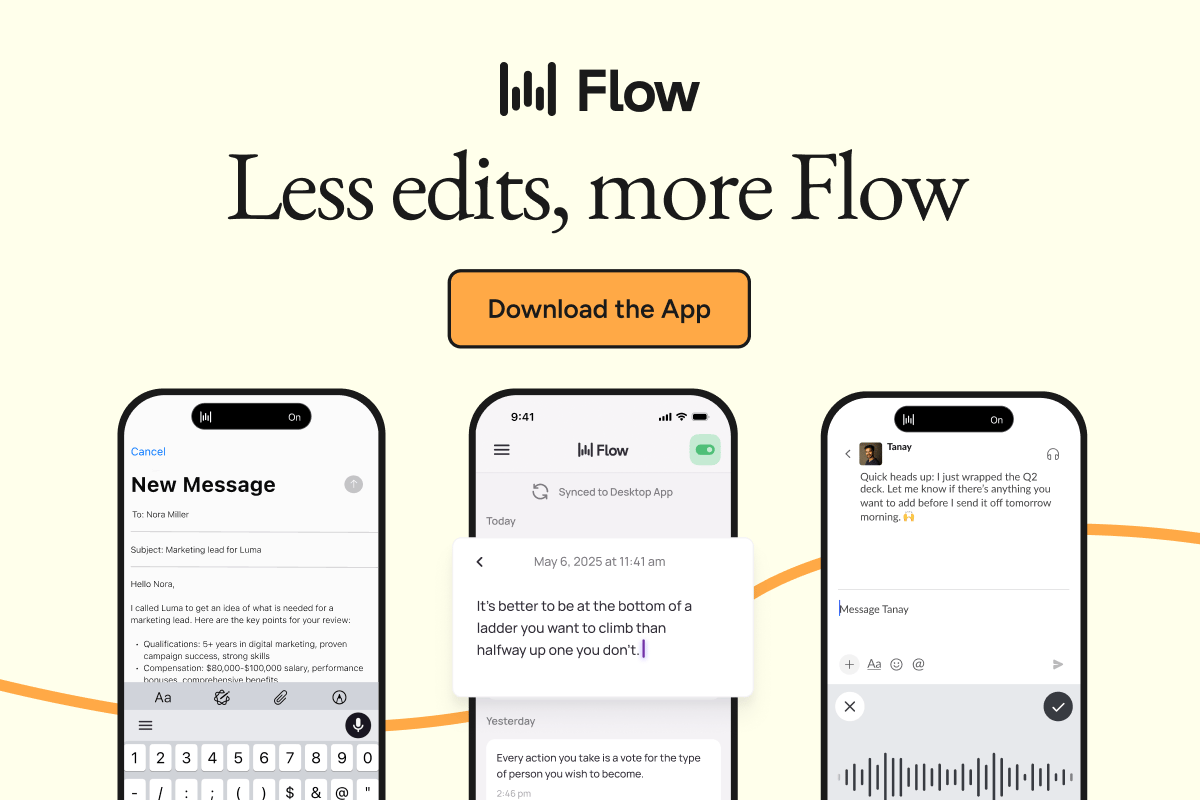
Dictate the messy version. Wispr Flow outputs the clean version. It removes filler, fixes punctuation, and formats lists so your text is ready to paste into email, Slack, docs, or prompts.

Thursday Trivia
One is AI, and one is real. Which is which? (Vote below!)
A.

B.

Which is AI, and which is real?Which is AI, and which is real? The answer is below, but place your vote to see how your guess everyone else (no cheating now!) |

A Cat’s Commentary


Trivia Answer: B is AI, and A is real; perhaps the absolutely absurd scenario of an owl rolling up in your tent gave it away…
 | That’s all for now.
|
