.jpg)

.jpg)



Welcome, humans.
It’s the Wednesday before Thanksgiving, so we’re pretty sure not a lotta work is getting done today. In that same spirit, here’s a few shots of slop you can shoot before cruising into the holiday weekend!
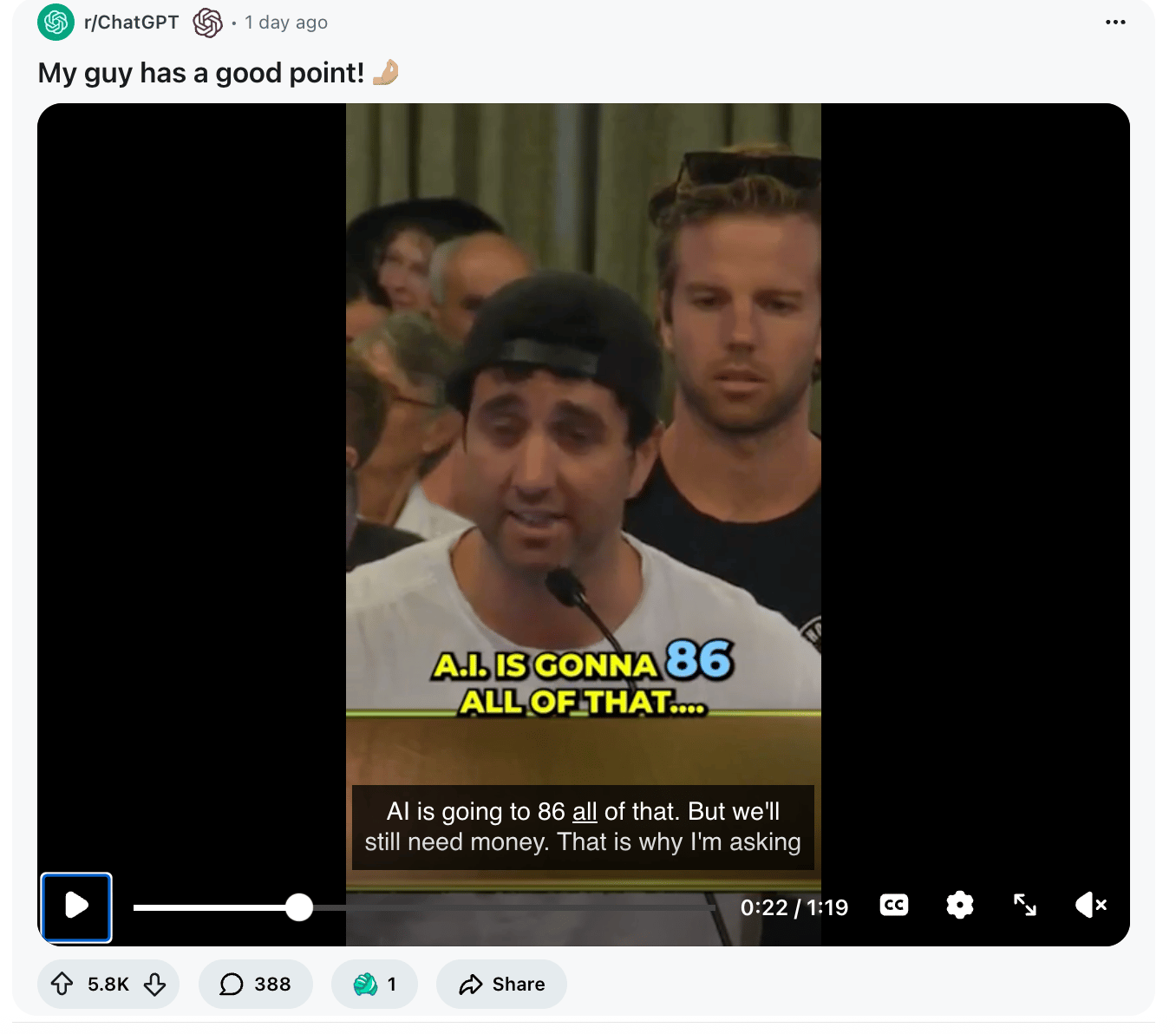
Slop shot #1: We genuinely did not see this one coming…
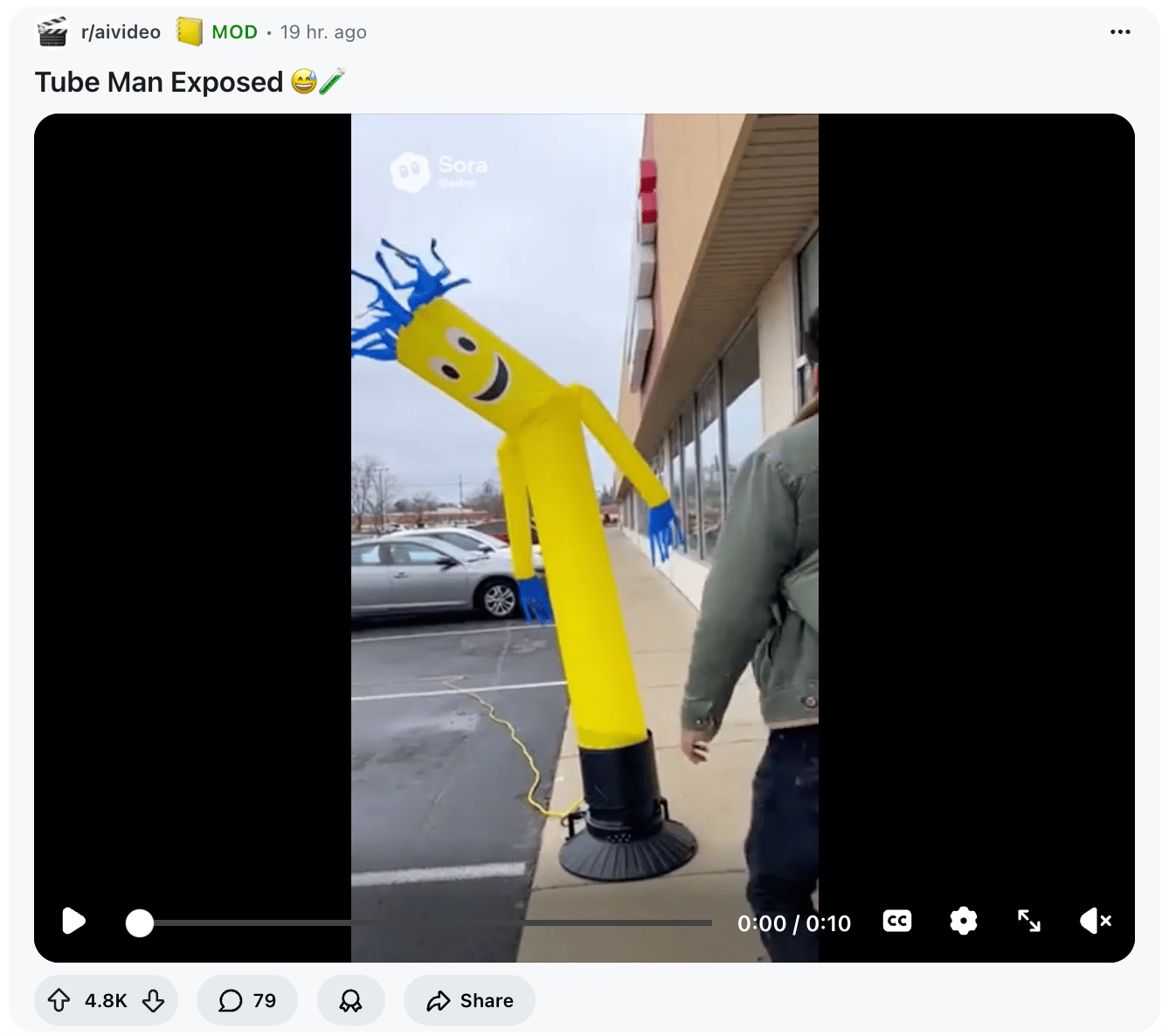
Slop Shot #2: It’s like they made this one for us!

Slop Shot #3: This one’s from 2020, but it still hits.
Here’s what happened in AI today:
- We break down the Genesis Mission to double US scientific productivity.
- Black Forest Labs released FLUX.2, an open 32B cutting-edge image model.
- OpenAI projected 220M ChatGPT subscribers by 2030.
- Multiverse Computing created DeepSeek R1 Slim.

WTF is the US’ “Genesis Mission”? America's AI “Manhattan Project“ to Double Scientific Productivity, Explained
So in case you forgot, the US government’s actually done some awesome things with science: it built the internet, sent humans to the moon, and cracked the atom.
Now, US President Donald Trump just signed an executive order launching the Genesis Mission, a new federal AI initiative being compared to the Manhattan Project for AI that aims to do the same thing, but for AI-powered scientific discovery.
Here's the setup: Despite research budgets soaring since the 1990s, scientific progress has actually stalled. New drug approvals have declined, and we need more researchers to achieve the same outputs.
The federal government owns the world's largest collection of scientific datasets (think decades of research from NASA, NIH, Department of Defense), plus massive supercomputing power across 17 National Laboratories.
But it's all scattered, gathering dust. The Genesis Mission changes that, with the ambitious goal of doubling the productivity and impact of American research within a decade.
Here’s how: Michael Kratsios (assistant to the president for science and technology) will coordinate the national effort alongside Energy Secretary Chris Wright, who'll build the “American Science and Security Platform”, a closed-loop AI experimentation platform connecting:
- DOE supercomputers and quantum computing systems.
- AI-powered robotic laboratories that can design and run experiments autonomously.
- Secure, multi-domain scientific datasets (unlike commercial AI trained on the open internet).
- Digital twins for advanced manufacturing.
- Real-time collaboration between scientists, AI systems, and experimental facilities.
Here's what that could enable:
- Fusion energy: AI will help design, test, and stabilize fusion reactors in real-time, potentially delivering “fusion you can plug into.“
- Drug discovery: Research that took years could shrink to weeks or months.
- Materials science: AI will co-design substitutes for critical materials, reducing foreign supply chain dependence.
- Quantum computing: AI generates and verifies new quantum algorithms while scientists validate results.
- Space exploration: Connecting particle physics to cosmic structures to understand dark matter and dark energy.
Here’s the current timeline:
- Within 60 days, identify 20+ science challenges.
- Within 90 days, catalog available computing resources from DOE and industry partners.
- Within 270 days, demonstrate initial capability for at least one challenge.
This builds on the existing National Artificial Intelligence Research Resource, which already partners with OpenAI, Google, and Palantir (read more). Plus, the DOE just announced new AI supercomputers with AMD and NVIDIA at Oak Ridge National Laboratory. Parts of the Genesis platform will open to qualified researchers, innovators, and companies.
Why this matters: If you're working in AI or scientific research, this could dramatically expand access to computing power and datasets ( previously locked behind government walls (data that’s vibe estimated to be worth ~$200B a year). The federal government is betting that AI can break through the productivity plateau that's plagued scientific research for decades.
Within the next year, expect announcements about which breakthrough challenges get tackled first (fusion energy, quantum computing, and critical materials are front-runners) and which companies land partnerships to build America's most powerful scientific platform.

FROM OUR PARTNERS
Run IRL ads as easily as PPC
AdQuick unlocks the benefits of Out Of Home (OOH) advertising in a way no one else has. Approaching the problem with eyes to performance, created for marketers with the engineering excellence you’ve come to expect for the internet.
Marketers agree OOH is one of the best ways for building brand awareness, reaching new customers, and reinforcing your brand message. It’s just been difficult to scale. But with AdQuick, you can plan, deploy and measure campaigns as easily as digital ads, making them a no-brainer to add to your team’s toolbox.
You can learn more at AdQuick.com

Prompt Tip of the Day
Anthropic’s Alex Albert shared the highlights of their official prompting guide for Claude Opus 4.5—and the TL;DR is that this model listens too well.
He says if your old prompts used aggressive language like “CRITICAL: You MUST use this tool,“ you'll now see overtriggering. The fix? Dial it back to just “Use this tool when...“
Other quick wins from the guide:
- Stop overengineering: Add “Only make changes that are directly requested. Keep solutions simple.“
- Force code reading: Tell it “ALWAYS read relevant files before proposing edits. Do not speculate about code you haven't inspected.“
- Boost vision tasks: Give Opus a cropping tool to “zoom“ in on dense images.
One developer shared his prompts he constantly adds: “Do minimal required changes, but still deliver goal. Do not put comments into the code. Do not use emojis. Be straightforward and sharp.“
Want these baked into your workflow? Check out this Concise Output skill and Anthropic's migration plugin for Claude Code for some drop-in solutions.
Our favorite insight: With Opus 4.5, less is more. The model follows instructions so precisely that your old “please please please do this“ prompts might actually backfire. Write like you're texting a competent colleague, not begging a stubborn robot.
Treats to Try
*Asterisk = from our partners (only the first one!). Advertise to 600K daily readers here!
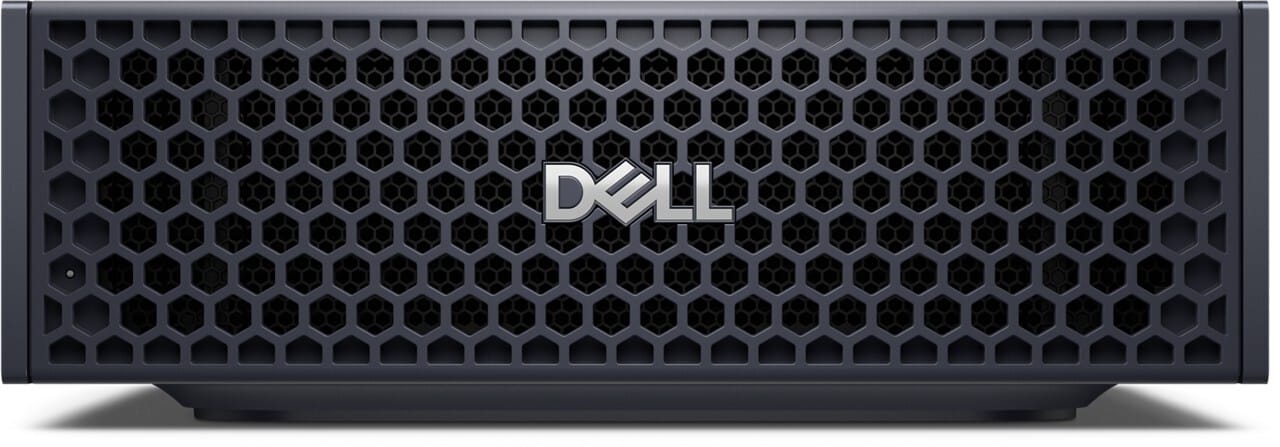
- *The Dell Pro Max with GB10 is the world's first desktop with NVIDIA GB10 Grace Blackwell Superchip. That means next-generation GPU architecture, 128GB of memory, and 4TB storage ready for whatever AI throws at you. Purpose-built for data science teams who refuse to wait. Build on next-gen tech.
- CLōD gives you one API to access 26+ models with built-in programmable cost, safety, and compliance controls.
- Nuraline plugs into your AI system, monitors every interaction in production, and automatically turns failures into new tests and fixes so your agents get more reliable over time.
- Labelbox labels your data (tagging images, rating model responses, transcribing audio) and evaluates your AI models so you can train more accurate systems.
- Sardine watches how users interact with your site (mouse movements, typing speed, device fingerprints) to catch fraudsters before they steal money or take over accounts.
- Mira are smart glasses that record your conversations and meetings, then instantly pull up details when you need them through a private display (raised $6.6M, from the team behind those viral spy glasses).
- SuperDesign (from Jason Zhou!) is a design agent that either designs a site from scratch, or clones existing sites (like Airbnb or X, extracting their design systems) to redesign them directly in your browser, tweaking layouts, colors, and components before building your own version (video).
Around the Horn
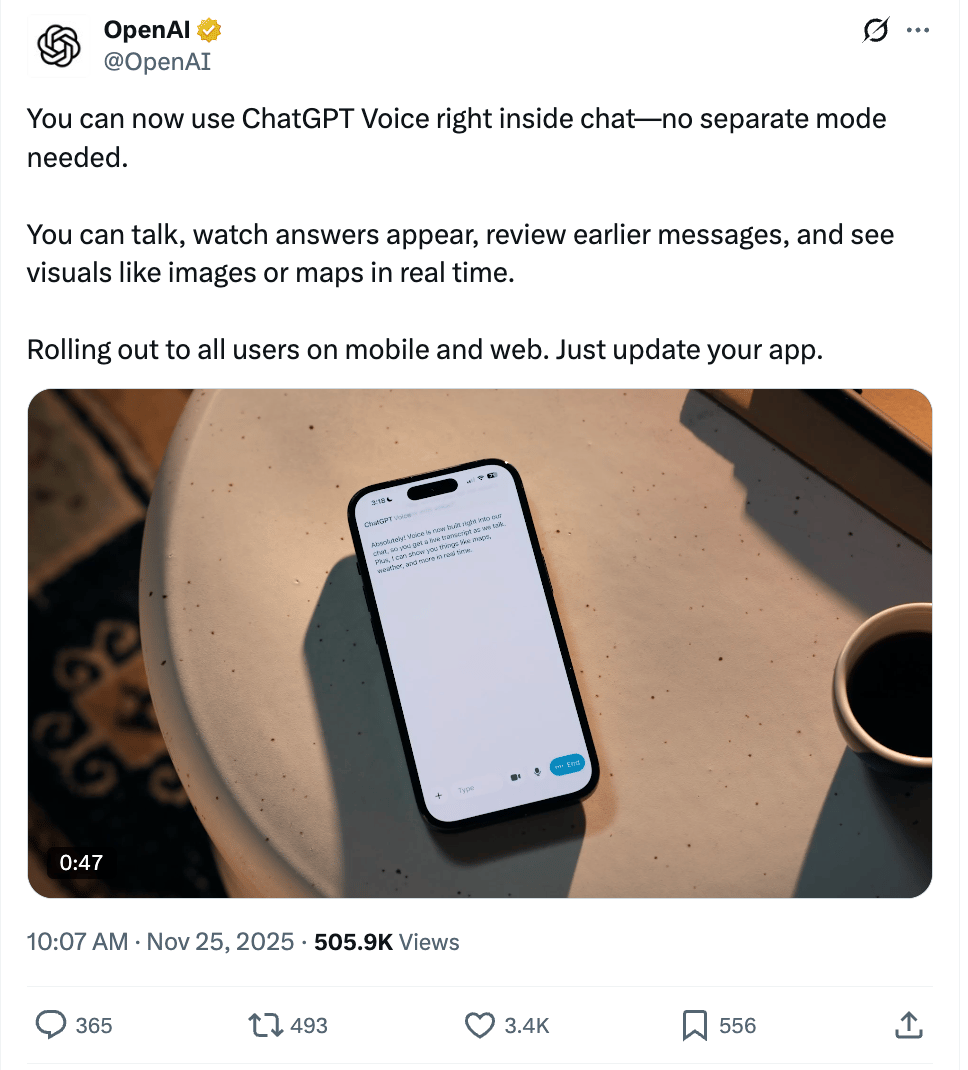
Settings → Voice Mode for the old version
- Black Forest Labs released FLUX.2, a 32B image model that combines up to 10 reference photos to generate 4MP photorealistic images matching your exact style with readable typography on infographics and direct pose control—NVIDIA already optimized it to run 40% faster with 40% less VRAM on RTX GPUs like the 4090 via ComfyUI or API (free for non-commercial use, w/ commercial license and API pricing available through BFL, FAL, Replicate, TogetherAI, Cloudflare, DeepInfra).
- OpenAI projected that at least 220M people could pay for ChatGPT by 2030, up from 35M paid subscribers as of July, which could generate (our calculations now) ~$59B to ~$64B in annual subscription revenue by 2030, depending on how many users opt for Teams ($25) vs individual Plus ($20) and assuming no price increases (bc of course, there will be).
- Multiverse Computing created DeepSeek R1 Slim, a version 55% smaller than the original Chinese AI model that claimed to remove built-in censorship (made via their model compressor, CompactifAI).
- Alibaba says its Qwen chatbot app has pulled in more than 10M downloads in its first week after relaunch, signaling early real consumer traction in China’s race to build a ChatGPT rival.
- Michael Burry of The Big Short fame (in that, he shorted the housing market back in 2008) launched a paid Substack (Cassandra Unchained) to give his side of the AI bubble story; it’s about $400 to subscribe though!

FROM OUR PARTNERS
Taplio: meet your LinkedIn growth shortcut
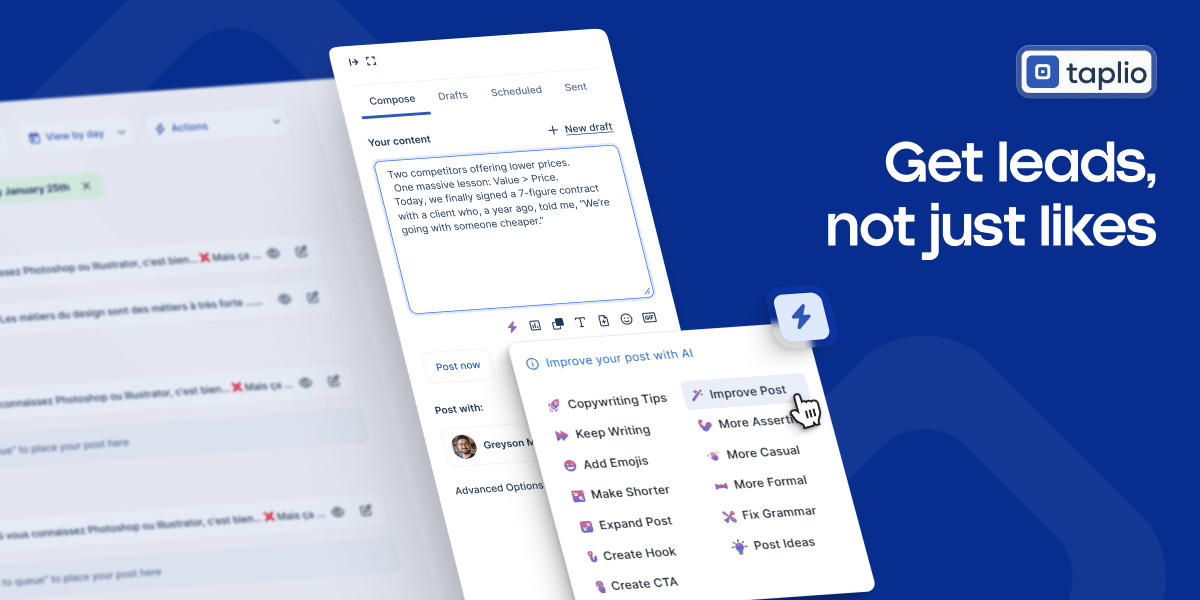
Taplio is an all-in-one LinkedIn growth tool to help you turn content into pipeline and grow your personal brand.
With Taplio you can:
- ✅ Instantly write posts made for your niche
- 💬 Generate AI-powered Smart Replies that cut time from 3 hours → 30 minutes
- 🤝 Build trust, visibility, and pipeline daily
“Taplio is how I’ve grown by over 30,000 followers on LinkedIn. I highly recommend it.”
- Amanda Goetz, LinkedIn Creator (80k newsletter subs, $400,000 generated on LinkedIn).
Try Taplio for free for 7 days

Midweek Wisdom
- The above video is like catnip for AI industry insiders… Ilya Sutskever explains to Dwarkesh why today's AI models ace benchmarks but fail basic tasks, why we're entering a new “age of research” where ideas matter more than scale, and what his new company, SSI, is actually building—this is essential viewing for anyone trying to understand where AI capabilities are actually headed, and it's the deepest publicly available window into how Ilya thinks about what's actually hard about AI, and where the next breakthroughs need to come from.
- Karpathy argued that you’ll “never be able to detect the use of AI” reliably in student work and that schools should shift back toward in-class exams and oral defenses instead of outsourcing judgment to glitchy AI-detection tools.
- “The Bitter Lesson of LLM Extensions” argues that as we bolt agents, tools, and plugins onto LLMs, the real “bitter lesson” is that most hand-rolled extension systems collapse under complexity, and the long-term win will be letting models themselves learn how to adapt and compose capabilities on the fly.
- popEVE is a new AI model from CRG and Harvard that uses evolutionary data to score genetic variants for disease risk, correctly flagging the most damaging mutation in 98% of 513 severely ill children and outperforming existing tools on key benchmarks for rare disease diagnosis (paper).
- CERN has published a CERN-wide AI rulebook that bakes in transparency, human oversight, non-discrimination, sustainability, strict data privacy, and a “non-military use only” clause for every AI system used across its science and admin stack.
- Chris Barber polled AI researchers and prominent thinkers like Tyler Cowen, Richard Ngo, and Ken Stanley on career positioning for an AGI world, with the surprising consensus = that reputation, high-trust relationships, and “the ability to uncommit” matter more than specific skills, since following genuine curiosity remains one of the few reliable compasses when change is radical. For more, check out his AGI Prep blog.
A Cat’s Commentary