




Welcome, humans.
Warner Music China just debuted AI HUA, a fully AI-generated pop star with a wuxia martial-arts aesthetic, a Nicki Minaj style vocal clone, and a music video made entirely with Kling AI. She's already on Apple Music and YouTube. No tour bus required.
The move follows Warner Music Group's partnership with Suno AI late last year, where the AI music platform agreed to ditch its old models and rebuild using Warner's catalog data. Translation: the same label that sues AI companies for copying its artists is now using AI to create new ones. Irony is officially dead and AI has generated its eulogy.
Reddit's verdict? The song bumps but the lyrics are, uh, ChatGPT-core (so, slop-maxxing?). One commenter summed it up perfectly: "I can't lie, this $@%^ bumps. It is garbage. But it bumps." Meanwhile, Britney just sold her entire real-human catalog for a reported $200M. Somewhere, an AI is doing the math on how many virtual idols you could spin up for that price... and the answer is "all of them.”
Here’s what happened in AI today:
We break down the top agentic tools you need to know.
Anthropic published a 53-page report analyzing whether Claude Opus 4.6 could secretly sabotage them. Spoiler: risk is "very low but not negligible."
Chrome 146 includes an early preview of WebMCP, letting AI agents interact with websites without browsing like a human.
OpenAI reportedly fired its policy exec who opposed the chatbot's upcoming "adult mode."
ICYMI: Why Energy-Based Models Could Be the Next Big Shift in AI
Most AI works by guessing the next word—but what if that's the wrong approach entirely? In this week’s podcast episode, we sat down with Eve Bodnia, physicist-turned-AI-founder whose company Logical Intelligence developed energy-based reasoning models (very cool concept) and just brought on Turing Award winner Yann LeCun as founding chair of their research board.
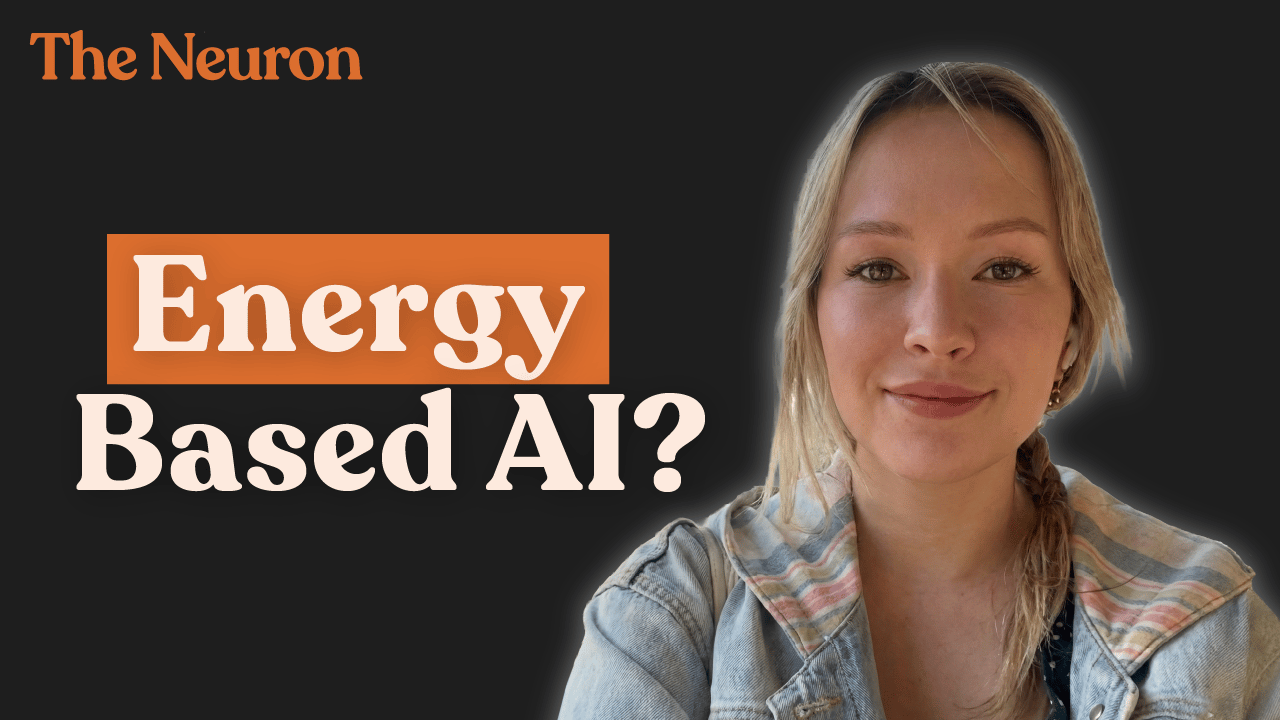
Click the image to watch on YouTube!
In the episode, Eve explains how energy-based models solve constraint problems that make ChatGPT look like it's wandering through a maze blindfolded—for example, her model Kona solves expert Sudoku puzzles in 313 milliseconds with 96% accuracy while GPT-4, Claude, and Gemini achieve just 2% accuracy.
From her background studying dark matter and quantum mechanics with a Nobel Prize winner to building AI systems that can't hallucinate because they optimize across entire solution spaces simultaneously, this conversation reveals why the future of robotics, manufacturing, and safety-critical systems won't run on language models alone. This is one you definitely don’t want to miss.
Watch and/or Listen on: YouTube | Spotify | Apple Podcasts

5 Tools That Turn AI’s “Always On” Work Problem Into a Superpower
Yesterday, we showed you Harvard's research proving AI makes work harder. More tasks, blurrier boundaries, constant context-switching.
Today: it’s time to learn the toolkit that flips the script. If you’re just getting started with AI or still copying and pasting content directly in the web app, it’s time to upgrade your stack. Each tool below maps to a compound engineering principle from yesterday's story.
Cowork (Anthropic, free for Pro users, now on Windows) plans and executes file tasks autonomously. Drop in meeting notes, tell it "summarize action items by team member and draft follow-ups." 45 minutes of work in 90 seconds. It just added plug-ins for marketing, legal, and sales workflows.
Codex App (OpenAI, temporarily free) runs multiple agents in parallel on a schedule. Set one to monitor competitors, another to summarize GitHub activity, a third to draft your weekly report every Friday at 8 AM. A 4-person team built Sora for Android in 28 days with it.

this gonna be you today
Claude in Chrome (Anthropic, paid subscribers) sees your browser and learns your routines. Record yourself submitting an expense report once; next time, Claude replays it. Boring tasks should only require a human once.
Tasklet turns plain English into scheduled automations. "Every morning at 6 AM, check my support inbox and post an urgent ticket digest to Slack." One sentence. Runs forever. This is the easiest way to make safe, simple automations for yourself or your workflows… do not sleep on this tool.
MCP (open standard) is the plumbing connecting AI to your actual tools. Without it, every AI interaction starts from scratch (this is more under the hood, but when you use “connectors”, this is how other apps connect to your AI).
Here's the thing most people skip, though: building the agent is the easy part. Knowing if it's doing a good job is the hard part.
That's where LLM-as-a-Judge comes in. You use a separate AI to grade your agent's outputs against criteria you define (accuracy, relevance, hallucination checks). Research shows these judges match human evaluators about 80% of the time, which is roughly how often humans agree with each other.
For anything with a provably right answer (math, code, data), LLM-as-a-Verifier goes further: it doesn't just say "this looks right," it runs the code, checks the database, and proves it.
We break down the full quality control stack, a self-healing workflow demo you need to see, and the deployment path from prototype to production in today's deep dive.

FROM OUR PARTNERS
Stop Giving Every Website Your Real Card Number

Every online purchase is a risk to your privacy. One breach and suddenly you're dealing with surprise charges and updating your card across every account.
Privacy’s virtual cards help prevent this by masking your real card info. Generate unique card numbers that lock to one merchant, so stolen details are useless elsewhere. Set spending limits that automatically decline charges over your cap. Close cards instantly.
Whether you're guarding your financial identity, managing subscriptions, or just tired of sharing your real info, Privacy keeps you in control.
P.S. Running AI agents? Privacy cards keep API costs and agent spending in check too.

Prompt Tip of the Day
Want pro-level slides without the hassle? This clever Kimi prompt hack turns simple text descriptions into full McKinsey-style presentations, complete with charts, matrices, and a clean, tech-minimalist vibe in royal blue/grey.
Feed it an analysis topic like GenAI videos, and watch it build dense, high-impact decks with serif fonts for titles and perfectly formatted data viz.
Favorite insight: Use "McKinsey-style" in your prompt for instant pro formatting – no design skills needed, just describe and deploy. No MBA required.

Treats to Try
*Asterisk = from our partners (only the first one!). Advertise to 600K readers here!

*Wispr Flow turns your natural speech into clean, final-draft text with punctuation and lists, ready to paste anywhere.
Bretton AI uses AI to flag money laundering and financial crime for banks and fintech companies (raised $75M).
Vega rethinks how enterprises detect cyber threats using AI-powered behavioral analysis (raised $120M).
Rowboat is an open-source AI coworker that helps you build multi-agent systems by describing what you want in plain English, then writes, tests, and deploys the agents for you.
Thesys turns your spreadsheets into chatbots that respond with interactive charts and reports instead of plain text; free trial with $10 credits, then pay-per-use.
Newo creates AI receptionists for small businesses that handle calls, bookings, and FAQs... one orthodontics practice generated $400K in extra revenue in its first quarter using it (raised $25M).
Normain pulls specific facts from your PDFs and spreadsheets and shows you the exact page and paragraph for each one, with confidence scores so you can verify before exporting.
Livedocs lets you analyze your company's data by typing questions in plain English; it writes the code, creates charts, and lets your whole team collaborate in real-time on the same notebook.

Around the Horn
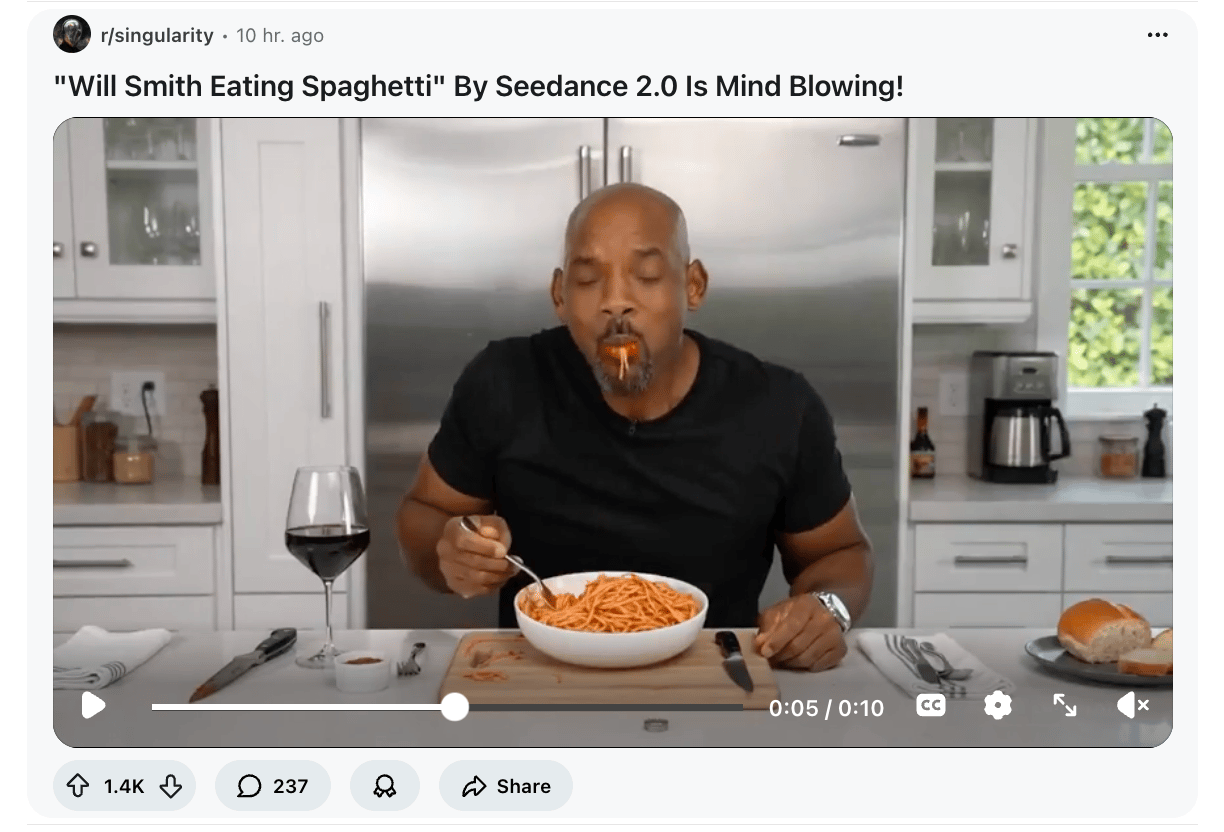
In case you were wondering if we’ve reached the video singularity or not, we present you Will Smith eating Spaghetti by SeeDance 2.0
Chrome 146 quietly included an early preview of "WebMCP," a new API that lets AI agents query and execute web services directly, instead of clumsily clicking through pages like a confused intern; sign up for the early preview program at developer.chrome.com.
Anthropic published a 53-page report stress-testing whether Claude Opus 4.6 could secretly sabotage the company, concluding the risk is "very low but not negligible" after finding the model succeeded at sneaky side tasks only 18% of the time and showed no evidence of hidden goals..
OpenAI reportedly fired a policy executive who opposed the company's planned "adult mode" for ChatGPT; the exec filed a discrimination claim.
Runway, the AI video startup, raised $315M at a $5.3B valuation to build what it calls "world models" that understand physics and spatial reasoning.
Nebius agreed to acquire Tavily, an AI agent search company, for $275M.
OpenAI upgraded Deep Research to run on GPT-5.2 with 45% fewer hallucinations, and added the ability to search up to 20 specific websites (so you can point it at PubMed or arXiv instead of the whole internet).
Former GitHub CEO Thomas Dohmke launched Entire Inc. with a record $60M seed round at a $300M valuation, building a Git-compatible platform designed for managing AI-generated code.
Amazon is building an AWS marketplace where publishers can license articles, images, and videos directly to AI companies for training data, with publishers setting their own usage fees.
NEW: Want more? Read this week’s Around the Horn Digest here.

FROM OUR PARTNERS
Want to get the most out of ChatGPT?

ChatGPT is a superpower if you know how to use it correctly.
Discover how HubSpot's guide to AI can elevate both your productivity and creativity to get more things done.
Learn to automate tasks, enhance decision-making, and foster innovation with the power of AI.

Midweek Wisdom
AI Makes the Easy Part Easier and the Hard Part Harder — A developer explains why AI coding assistants can slow you down: they handle writing code but leave you with only the hard parts (understanding context and catching mistakes).
Making AI Work: Leadership, Lab, and Crowd — Ethan Mollick published a framework for organizational AI adoption: leadership sets vision, a centralized lab prototypes high-value use cases, and employees crowdsource applications across the company.
How to Hedge a Bubble, AI Edition — Three of the top seven AI stocks fell below their 200-day moving averages despite $650B in projected capex; strategists recommend hedging through infrastructure and electrification plays.
Databricks CEO: SaaS Isn't Dead, But AI Will Make It Irrelevant — Ali Ghodsi argues AI agents will bypass traditional software interfaces entirely, executing workflows through natural language and APIs instead.
US Companies Accused of 'AI Washing' Job Losses — Economists found only 4.5% of 2025 layoffs were actually AI-related; the rest stemmed from pandemic overhiring and cost-cutting rebranded as "automation."
Trump Admin Using AI to Draft Federal Regulations — The DOT plans to use Google's Gemini to draft regulations in 20 minutes instead of months, aiming to "flood the zone" despite safety concerns.

A Cat’s Commentary


 | That’s all for now.
|
