


.png)

Welcome, humans.
So, a robot on Mars just made its own decisions about where to drive, and nobody on Earth told it how to get there.
NASA's Perseverance rover completed the first-ever autonomous drives planned entirely by generative AI. Here’s the problem it solved: Mars is 140 million miles away, which means a 20-minute delay for any instruction sent from Earth. So JPL partnered with Anthropic to let Claude analyze orbital imagery, identify safe terrain (bedrock good, sand ripples bad), and plot its own course through Jezero Crater.
As a result, Perseverance covered nearly 1,500 feet across Martian terrain without a single human-planned waypoint. The Claude-piloted rover looked at the landscape, figured out where to go, and just... went.
Meanwhile, my Roomba still can't avoid the same corner of my couch. That’s why he’s getting donated to Goodwill, and why I’m not surprised iRobot’s filing for bankruptcy.
Here's what you need to know about AI today:
- Apple launched Xcode 26.3 with full Claude Agent SDK integration for autonomous coding.
- NVIDIA seems likely to invest $20B in OpenAI's latest funding round.
- Software stocks plunged on AI disruption fears.
- Microsoft announced Publisher Content Marketplace for AI content licensing.
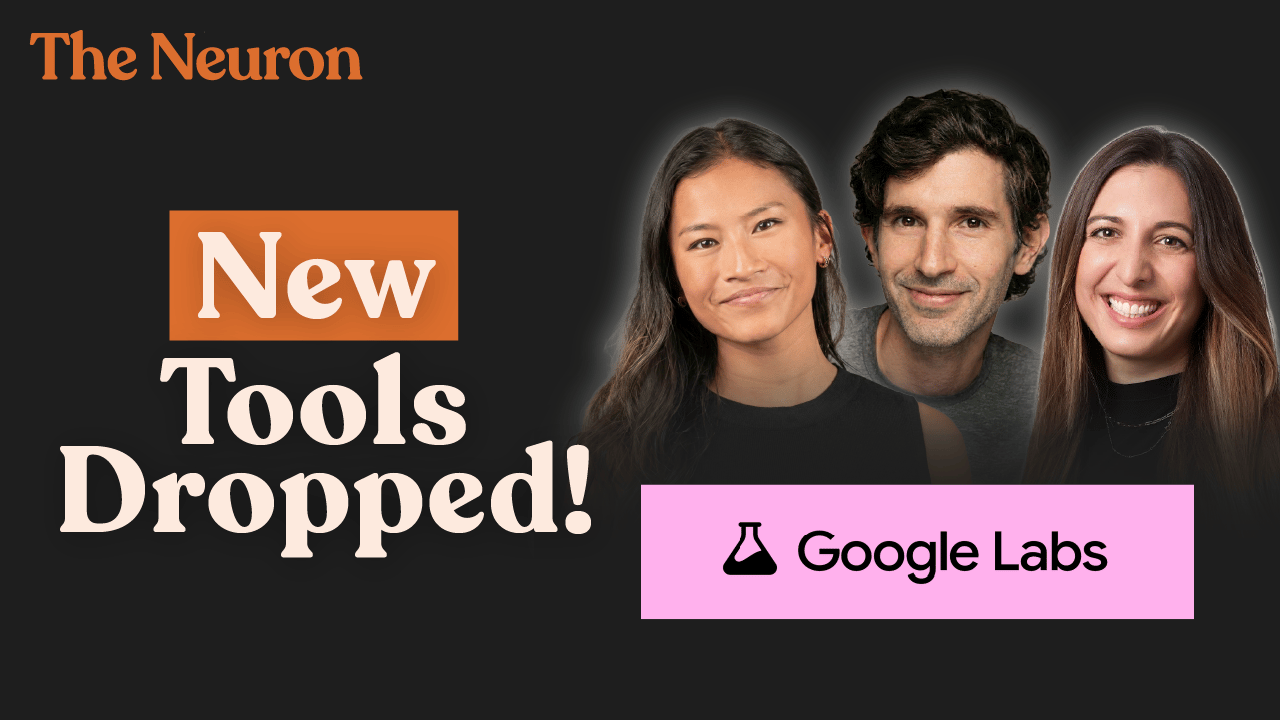
In this week's podcast episode, we sat down with three Google Labs PMs (Jaclyn Konzelmann, Thomas Iljic, and Megan Li) who each gave us exclusive demos of their respective tools: Mixboard, Flow, and Opal, all three of which are available to try right now at labs.google.
Why watch: You'll learn how to use Gemini Gems to chain together text, image, video, and web search into custom workflows that actually save you time—plus hear the PMs explain what next for the tools (think: more direct Gmail integrations, world-building for video, and AI that remembers context across your entire project).
Watch/ Listen: YouTube | Spotify | Apple Podcasts
Thanks to MIT xPRO for sponsoring this episode—check out their course Deploying AI for Strategic Impact.
Why Apple (and Anthropic) might be the real winners of the AI disruption era.
While software stocks were melting down yesterday, Apple quietly dropped something that might explain the chaos.
Xcode 26.3 now ships with full Claude Agent SDK integration, giving millions of iOS developers an autonomous AI copilot.
This means Claude can now work autonomously on long-running tasks: exploring your project's file structure, understanding how SwiftUI and UIKit connect, then making changes across multiple files to achieve a goal. Give it a task, and it breaks it down, decides which files to modify, and iterates until done.
The killer feature? Visual verification. Claude can capture Xcode Previews to see what the interface looks like, identify issues, and fix them on its own. No constant human input required.
What else Claude can do in Xcode 26.3:
- Search Apple's documentation and API guides directly
- Explore full file structures and understand project architecture
- Capture visual Previews and iterate on SwiftUI views
- Break down complex tasks and execute them autonomously
For terminal lovers, Xcode 26.3 also exposes its capabilities through the Model Context Protocol (MCP). Claude Code CLI users can integrate with Xcode and capture Previews without leaving the command line.
OpenAI's Codex is also getting integrated, but Anthropic got the press release love today. TechCrunch has the full breakdown.
But this story isn't just YET ANOTHER coding tool news piece. It's about where AI is headed... and who controls the interface layer.
Here’s what seems to have happened with the so called “SaaSpocalypse”: Anthropic launched a new legal plugin (here) as part of their larger plugin push that can handle document review, compliance tracking, and NDA triage.
The response? A $285 billion rout across software, legal tech, and financial services stocks. Thomson Reuters down 16%. RELX (LexisNexis's parent) down 15%. Etc etc.
"Trading is very much 'get me out' style selling," Jeffrey Favuzza at Jefferies told Bloomberg. "The draconian view is that software will be the next print media or department stores." Whoa.
Dramatic? Yes. Overblown? Analyst Mandeep Singh certainly thinks so. Although he did highlight the need for SaaS companies to change from a seat-based model to a consumption-based model… because if companies need less employees overall… you won’t grow revenue from adding more seats.
Now here's the counter-narrative: Not everyone is doomed. And shockingly, Apple might be positioned perfectly to ride this wave. We think Dan Shipper put it well here:
"Hot take: Apple is going to be a big winner in AI. Native apps are naturally easier to vibe code, you only break things for individual users. Apple ecosystem connects to a bunch of extremely important data like health and messaging that makes AI better. Everyone's buying a Mac mini for their agent... the TAM for their hardware is going up 100x."
While OpenAI, xAI, Anthropic, and Google competed on model capabilities, Apple was building the integration layer. Their Siri 2.0 overhaul (coming this spring with iOS 26.4) will understand your personal context, access your messages, emails, and health data, and then be able to, most importantly, use that context to take actions across apps.
The Google-Gemini partnership gives Apple the model backbone to do this. Apple just provides the user experience and the privacy guarantees via their private cloud compute system.
Our take: We’re bullish on Apple finally figuring this AI thing out in 2026. They've had years to tinker while others rushed to market. Now the models are good enough to deliver on their promises, and they control the hardware, the OS, and the ecosystem. And if Dan’s right that people will soon vibecode their own apps, the app store could become The Skills Store or The Agent Store or even The PlugIn Store that your agent accesses on your behalf.
As Aaron Levie of Box implied on TBPN yesterday, the “SaaSpocalypse” is really a question of who owns the interface layer, and how strong the network effects inherent in that interface are.
He and John Coogan workshopped the “perfect heuristic” to assess if your SaaS tool is AI-safe: if your customer can get the same value out of your tool with a fresh install that does the exact same thing, like “personal productivity [software] with no network effect with limited sort of data that's aggregated, that's a danger zone.”
So if Anthropic plugins (or skills, or subagents, or whatever form they ultimately take) can replace entire software categories, the most value migrates to whoever controls where those plugins live. Right now, that's looking like Apple and Anthropic sitting in a tree…
FROM OUR PARTNERS
Allow us to reintroduce… Slackbot (now GA)
.png)
Slackbot is your context-aware AI agent built directly into Slack. It understands your conversations, files, and workflows to deliver what you need, right when you need it without any setup. Instead of hunting for information across channels and documents, Slackbot synthesizes what you need instantly — respecting your permissions and using only what you can already see. Think of Slackbot as the productivity engine that lives right where you already work.
In this webinar, you'll learn about:
- Slackbot’s enterprise-grade security by design.
- How to turn information into action with Slackbot.
- How customers like Engine and Asymbl are already using Slackbot.
Prompt Tip of the Day
AI educator Elvis Saravia shared a killer workflow for “agentic image generation” in Claude Code:
- Install the image generator plugin from DAIR Academy.
- Give Claude a task: “Create an infographic of this blog post.”
- Claude fetches the content, extracts key concepts, generates the image.
- Use this Playground plugin to annotate what needs improvement.
- Feed the annotations back to Claude, which refines the image.
The loop = generate → annotate → refine. One prompt, and the agent handles the entire workflow. Check out the DAIR Academy for more content like this; Elvis is awesome!
Want more tips like this? Check out our Prompt Tip of the Day Digest for January.
FROM OUR PARTNERS
Editor’s Pick: Lightfield
Lightfield is an AI-native CRM that auto-updates from email, calendar, and built-in call recording—keeping every record up to date without manual data entry.
Treats to Try
- Alibaba dropped Qwen3-Max-Thinking, which now outperforms DeepSeek-V3.2, Claude Opus 4.5, and Gemini 3 Pro on math, coding, and hard reasoning benchmarks—still fully open-weight under Apache 2.0.
- Biomni Lab connects hundreds of biological databases and research tools so you can ask research questions and agents gather data, run analyses, and design experiments (raised $13.5M)—free to try.
- Qwen3-Coder-Next is an open-source coding model you can run locally on 46GB RAM that works with Claude Code, Cursor, and Cline while scoring >70% on SWE-Bench Verified (blog, tech report)—free and open-source.
- GLM-OCR extracts text, tables, formulas, and structured data from documents—upload a scanned invoice, handwritten note, or complex PDF and get Markdown or JSON output—open source (free) or paid API at $0.03/million tokens.
- Sandbar's Stream Ring is a wearable that captures your whispered thoughts and plays them back in your personalized voice, keeping your phone as a background archive rather than a constant distraction.
- MinIO AIStor Tables unifies your database tables and file storage in one system, so AI can access all your data without juggling multiple storage services—40% cheaper than AWS S3 Tables (blog).
- Theorizer reads thousands of papers and generates scientific theories with testable laws and evidence—query a topic and it retrieves up to 100 papers, extracts findings, and synthesizes structured theories in 15-30 minutes (paper, 3,000 AI/NLP theories dataset)—free to try.
- ACE-Step-v1.5 generates a full song in under 2 seconds on A100, runs on ~4GB VRAM locally, supports LoRA fine-tuning, and beats Suno on eval metrics (MIT license).
- Kiln.bot orchestrates Claude Code instances from GitHub projects, polling issues and running /commands automatically.
- Step-3.5-Flash from StepFun is a new fast, open model worth testing.
- Marble generates persistent 3D worlds from images or videos that you can explore and build on—the scenes stay stable instead of disappearing after 60 seconds.
- Motion Sketch from Runway lets you scribble prompts instead of typing them for Gen-4.5 video generation.
- MuJoCo-GS-Web runs physics simulations with photorealistic 3D Gaussian Splatting scenes in your browser—import any robot, click and drag objects, and it works on your phone without a GPU (code).
- Alakazam generates playable games in real-time on your laptop—trained on 15 minutes of footage, it runs at 30fps locally on your Mac without cloud processing (play demos).
- Gemini CLI extensions add new capabilities to Google's command-line AI interface.
- Chrome's Gemini 3 auto browse handles multi-step tasks across tabs—tell it "compare hotels and flights for my budget" and it searches, compares prices, applies discount codes, and adds items to cart, pausing for confirmation before purchases—Google AI Pro/Ultra only.
- Gemini CLI hooks inject custom scripts at lifecycle events to auto-run linters after file edits, block sensitive data writes, or add project context before requests, giving you deterministic control over the agent loop
- ICYMI: AI2 released Open Coding Agents (SERA), fast open-source coding agents that adapt to any repo
Around the Horn

- MirrorMe (featured above) claims the world's fastest humanoid robot at 10 m/s (22.4 mph), though skeptics note it's on a treadmill with a safety tether. Also, the Jack Sparrow run is... a choice.
- NVIDIA is nearing a deal to invest $20B in OpenAI's funding round.
- Software stocks plunged on AI fears yesterday, with WSJ reporting that Adobe was down 7.3%, Salesforce down 6.9%, and Thomson Reuters down 15.8%.
- Related: Anthropic launched a new legal plugin (here) as part of their larger plugin push.
- Microsoft launched Publisher Content Marketplace, letting publishers license premium content to AI systems.
- Adobe introduced Creative Collective, bringing practitioners together to share AI adaptation strategies.
- Zoom announced agentic AI features for Zoom Spaces, including proactive room-booking recommendations.
- The founding CTO of npm called OpenClaw (the DIY AI bot platform) a "security dumpster fire"; this OC Register piece flags a lot of the issues.
- Meta officially tied employee performance reviews to AI usage.
- Lotus Health raised $35M for an AI doctor that sees patients for free.
- Carina Hong’s Axiom Math just quadrupled their valuation.
- Waymo officially raised $16B; if you don’t know, Waymo picks you up in fully autonomous cars (no human driver) across 6 U.S. cities, and will expand to 20+ more in 2026 including Tokyo and London.
- Intel announced plans to start making GPUs, challenging NVIDIA's dominance.
- A16z released a new survey that says OpenAI leads enterprise AI adoption at 78%, but Anthropic jumped 25% to reach 44% penetration among Global 2000 companies, shrinking OpenAI's market share to 56%.
- Anthropic just published new research (code) showing AI systems increasingly fail through incoherence rather than systematic misalignment as tasks get harder, with model errors becoming more random and unpredictable on complex problems requiring extended reasoning.
FROM OUR PARTNERS
Join Snyk's Annual Fetch the Flag on February 12th @ 12pm EST
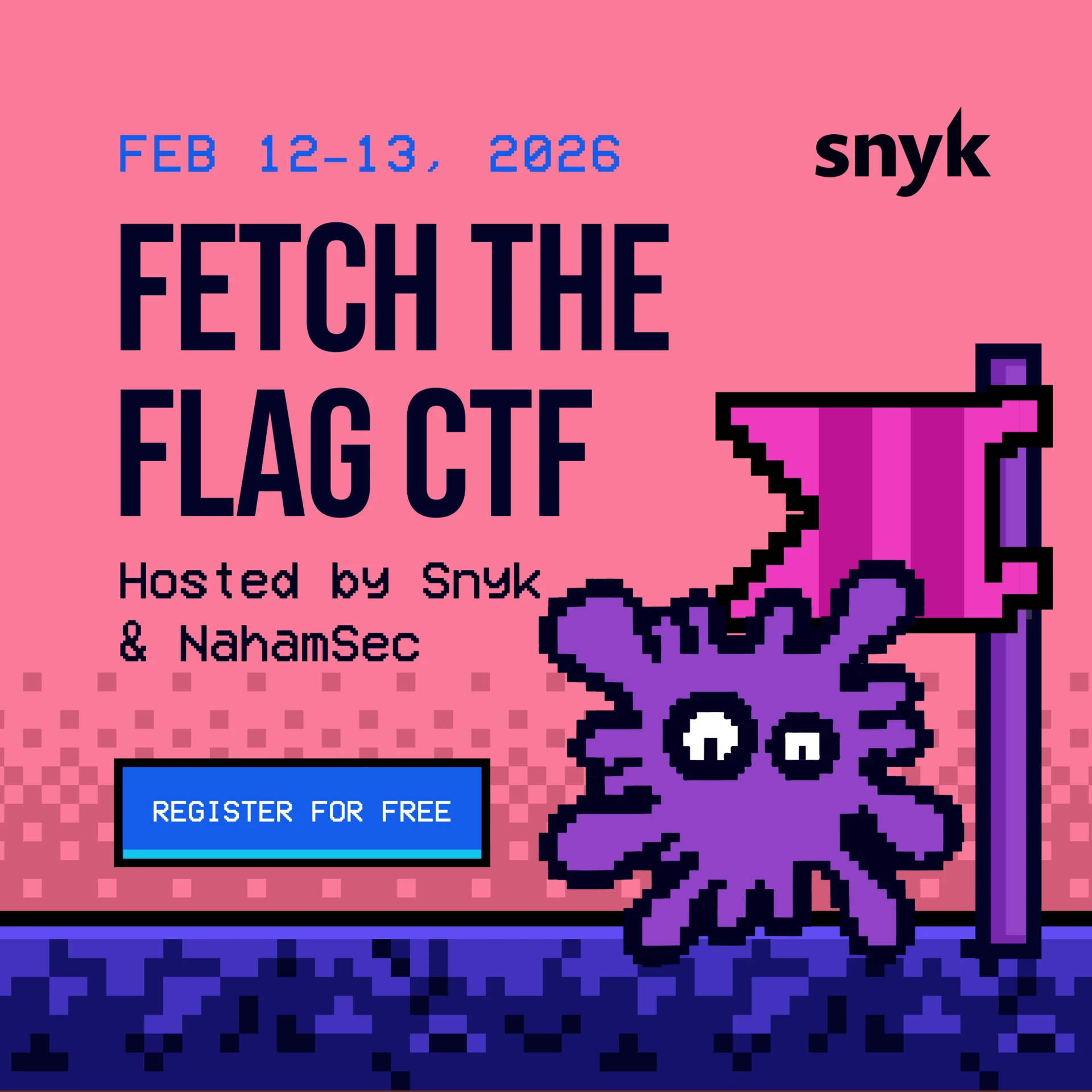
Snyk’s annual Fetch the Flag CTF is back! Hosted by Snyk and NahamSec from Feb 12 at 12 PM ET to Feb 13 at 12 PM ET.
Here's what you can expect:
- Tackle 15 challenges including web and binary exploitation, OSINT, and more!
- Enhance your professional development & earn CPE credit
- Compete to win: the top three teams and the top three individual players will take home Rokid AR Joy 2 Glasses.
Midweek Wisdom
- Jim Fan (NVIDIA's robotics lead) dropped a fascinating essay on “The Second Pretraining Paradigm.”
- The first paradigm = Next word prediction. The second = Next physical state prediction (world models).
- His argument:
- Vision-language models treat vision as a second-class citizen.
- Images go through an encoder, then get routed into a language backbone.
- But for physical AI, this is backwards.
- We need models that understand “if you tip the coke bottle, it spreads into a brown puddle and stains the tablecloth,” not just “this blob of pixels is a Coca Cola brand.”
- Apes can't do GPT-level language, but they can drive golf carts and change brake pads. That's world modeling.
- Fan predicts 2026 will be the year Large World Models lay real foundations for robotics.
- Also worth reading:
- Pragmatic Engineer measured which AI coding tools actually work. Results vary wildly by task type.
- Big Technology breaks down the new data showing OpenAI's market lead is contracting as Claude and Gemini gain ground.
- Forbes interviewed Sam Altman, who revealed his succession plan: hand OpenAI leadership to an AI model when it's capable.
- Nick Dobos on X: “If you're writing AGENTS.md for a company repo, you're effectively prompting $100,000+ in compute. 100-person eng team at $200/mo AI coding agent = $240K/year run on your prompt.” Soon, maintaining AGENTS.md files will be someone's full-time job.
- Here’s a deep dive on The Pentagon’s updated artificial intelligence strategy.
- The author of the AI 2027 report, a.k.a the AI Futures Project, want to correct the record and push back against the doom-bait headlines published by The Guardian and other outlets that misrepresented their work.
- Watch:
- Lex Fridman, Nathan Lambert and Sebastian Raschka discuss the state of AI in 2026; it’s 4 and a half hours with lots of technical details, but these three are great (TBH, we haven’t watched Lex in awhile, but he’s our O.G. favorite AI podcaster… gotta love this return to form for him! Also check out Nathan’s Interconnects and Sebastian’s work too).
