




Welcome, humans.
In the ultimate sign of the times, Yahoo has once again become a search company with their new Yahoo Scout tool.
Come on, y’all. What’s more dot-com bubble coded than Yahoo’s return?
Here’s what happened in AI today:
OpenAI, Google, and Moonshot all launched tools that let AI investigate problems on its own.
SoftBank entered talks to invest $30B more in OpenAI before an H2 2026 IPO.
Court filings allege Mark Zuckerberg personally approved romantic chatbots for minors.
ESA astronomers used AI to discover over 800 cosmic anomalies in ~2 and a half days.
ICYMI: 🎙️ New Podcast: This AI Agent Can Remember 80 Million Tokens
One Factory AI user ran a coding session that hit 80 million tokens… and the agent still remembered what it was working on. Tokens are text chunks the AI processes, so 80M of them equals roughly 60M words; that’s A LOT.

We sat down with Factory AI's co-founder Eno Reyes to learn how they built a context compression system that powerful (and also outperformed both OpenAI and Anthropic). Plus, we chat about how they built the perfect agentic coding tool for real production codebases based on Stanford research that found codebase quality is the only predictor of AI coding success. Check it out: YouTube | Spotify | Apple Podcasts

AI Learned to Do Its Own Homework: Three Announcements That Redefine What "Using AI" Means
For two years, the workflow was simple: you ask AI a question, AI spits out an answer. Today, three separate announcements from OpenAI, Google, and Moonshot AI quietly killed that paradigm.
The new model? AI that investigates, manipulates, and coordinates—without being asked.
First, OpenAI's Prism embeds GPT-5.2 directly inside your research paper.
Instead of copy-pasting text into a separate chat window, GPT-5.2 now reads your entire manuscript—structure, equations, citations, figures—and works alongside you like a co-author who's already read every draft.
It pulls relevant literature from arXiv, converts whiteboard scribbles into publication-ready LaTeX diagrams, and reasons through your equations in context.
Kevin Weil, OpenAI's VP of Science, put it bluntly: “2026 will be for AI and science what 2025 was for AI and software engineering.”
Translation: This is OpenAI’s shot on goal for a “Claude Code, but for science.”
Next up, Google's Agentic Vision solves a problem you probably didn't know existed. When AI looks at an image, it gets one glance, and if it misses a serial number on a chip or a street sign in the distance, it guesses. Gemini 3 Flash now runs a “Think, Act, Observe” loop over images instead. That is:
Think: Plan how to investigate the image.
Act: Write Python code to zoom, crop, or annotate.
Observe: Append the modified image back to context and inspect the results.
The result: 5-10% accuracy improvements across vision benchmarks. In practice, this means Gemini can now draw bounding boxes around fingers to count them correctly, or zoom in on building blueprints to verify code compliance. One startup, PlanCheckSolver.com, reported 5% accuracy gains just by enabling this feature for architectural plan reviews.
Lastly, Moonshot's Kimi K2.5 takes this concept even further. Their “Agent Swarm” feature spawns a coordinated team of domain-specific agents that tackle complex tasks in parallel.
In one demo, a single prompt generated a 100MB Excel storyboard with 55 consistent visual scenes across a 10-minute short film adaptation of “The Gift of the Magi.”
The model decomposed the task, delegated to specialized sub-agents, and reassembled the output.
Their video-to-code feature is equally unhinged: record your screen while browsing a website, upload the video, and K2.5 clones the entire site… including all UX interactions and animations.
(Yes, this raises important questions about web scraping ethics, but so does everything else in AI right now, so I guess everything is YOLO mode until the Supreme Court rules on this stuff??)
Why this matters: Here’s a handy cheat sheet to explain what all this means for how our previous interaction paradigms (how we used to work with AI) is changing in 2026.
Old Workflow | New Workflow |
|---|---|
Ask → Answer | AI investigates on its own |
One context window | Full document/project context |
Single agent | Coordinated agent teams |
Static image processing | Active visual manipulation |
The common thread? AI is no longer waiting for you to ask the right question. It's figuring out what questions to ask, what tools to use, and how to verify its own work.
Expect this pattern to accelerate. If your job involves long documents, complex images, or multi-step research, the tools you're using in six months will look nothing like the tools you're using today; probably because the tools will be doing half the work themselves.

FROM OUR PARTNERS
Join GitLab’s Transcend event to unlock agentic AI for software delivery

Join GitLab Transcend for an exclusive virtual event exploring the true potential of agentic AI for software delivery. See how teams are solving real-world challenges by modernizing development workflows with AI, get a sneak peek of GitLab’s upcoming product roadmap, watch tech demos from product experts, and share your feedback directly with GitLab product experts.

Prompt Tip of the Day
There’s an ancient proverb: Give a cat a prompt, and he’ll use AI for a day. Teach a cat to prompt, and he can use AI for the rest of his life.
Well, here’s the ultimate prompt tip: Don't start with a prompt at all.
Instead, tell AI your goal, then have it interview you. You'll get better output, faster.
Okay, okay, here’s the prompt to do this: “Here's my goal: [X]. Ask me a series of 10+ questions to figure out exactly what you need from me to complete this goal end to end.“
You can even have it reverse engineer the whole conversation into a prompt at the end!

Treats to Try
*Asterisk = from our partners (only the first one!). Advertise to 600K readers here!

*Outskill is hosting a 2-Day AI-Mastermind that will teach 20+ AI tools, AI workflows, build agents & more in just 16 hours. Become an AI Pro now! (usually $395, free for you).
Pace automates insurance back-office work (submissions, endorsements, audits, renewals, claims) by reading thousands of pages at once and taking actions in your systems with expert verification.
FLORA gives you 50+ image and video models in one subscription, letting you test variations and collaborate with your team in one workspace (raised $42M).
Mistral Vibe generates, edits, and manages code for you through natural language instructions in your terminal or IDE, like creating a complete Python script for order payments from a simple prompt.
Google launched a $7.99/month AI Plus plan in the US and 35+ other countries that includes Gemini 3 Pro, NotebookLM, Flow's AI filmmaking tools, and 200GB storage.
Trinity Large is a 400B sparse MoE (size / type of the AI brain) model that runs 2-3x faster than competitors by activating only 13B parameters per token, trained on 17T tokens for $20M, giving you frontier-level coding and reasoning you can run yourself—free on OpenRouter, Apache 2.0 licensed (read Interconnects breakdown).
SERA lets you train a coding agent that adapts to any codebase (including your private repos) by learning repository-specific patterns and conventions—train a specialized 8B-32B agent for ~$400 and use it with Claude Code out of the box (code, PyPI, paper).
Ollama launch is a single command that sets up Claude Code, OpenCode, or Codex with local or cloud models (type
ollama launch claudeand you're coding—no config files needed).

Around the Horn

Anthropic doubled its latest fundraising round to $20B at a $350B valuation, and according to The Information, raised its 2026 revenue forecast 20% to $55B, but pushed back its expected cash flow positive timeline to 2028.
Mark Zuckerberg was accused of personally approving minors to access AI chatbot companions that safety staffers warned were capable of romantic interactions, according to a New Mexico lawsuit.
SoftBank entered talks to invest up to $30B more in OpenAI as part of a potential $100B funding round that would value the company at $830B pre-IPO.
Speaking of… OpenAI is reportedly targeting an H2 2026 IPO at a $1T valuation, according to Reuters, but projects cumulative losses of $115B through 2029.
Gatik says it became the first company to deploy fully driverless trucks at commercial scale in North America, racking up $600M in contracted revenue and 60K incident-free deliveries since mid-2025.
ESA astronomers used AI to discover over 800 previously unknown cosmic anomalies in Hubble Space Telescope archive data in just two and a half days.

FROM OUR PARTNERS
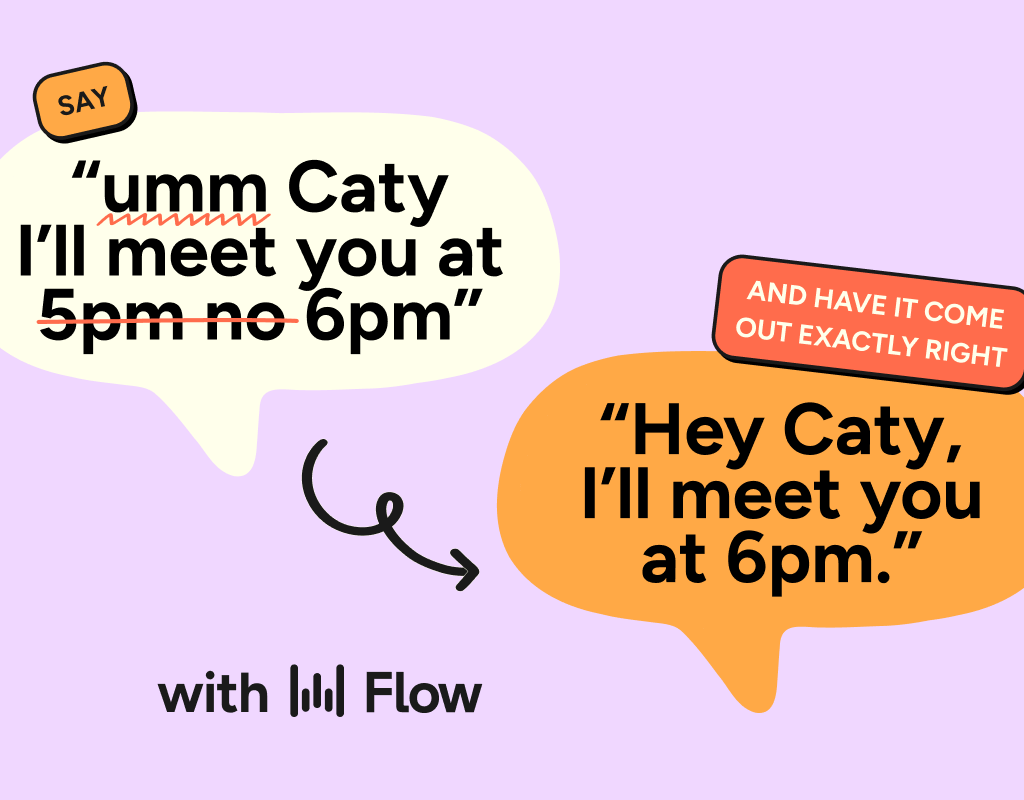
Wispr Flow turns your speech into clean, final-draft writing across email, Slack, and docs. It matches your tone, handles punctuation and lists, and adapts to how you work on Mac, Windows, and iPhone. Start for free today.

Midweek Meme


A Cat’s Commentary


 | That’s all for now.
|
