




Welcome, humans.
Arvind Narayanan of AI as Normal Technology debunked “Moravec's paradox”, the widely-cited claim that tasks hard for humans are easy for AI and vice versa, showing that it's never actually been empirically tested and is actually a selection effect caused by researchers ignoring thousands of tasks that are easy or hard for both humans and AI.
He argues this is a misconception that's led to both alarmism about imminent superhuman reasoning, AND false comfort about robotics capabilities, even though computer vision breakthroughs in 2012 already proved such predictions unreliable.
Here’s what happened in AI today:
Google published ATLAS, the largest study on multilingual AI training.
Microsoft internally scrambled to match Anthropic's Cowork.
Anthropic found 1 in 1K-10K AI conversations show “disempowerment” risk.
ICE disclosed it uses AI from Palantir and OpenAI for enforcement and resume screening.
Don’t forget: Check out our podcast, The Neuron: AI Explained on Spotify, Apple Podcasts, and YouTube — new episodes air every week on Tuesdays after 2pm PST!

Google Just Solved the Blueprint Problem for Building AI in 400+ Languages
Ever wonder why ChatGPT speaks English better than, say, Swahili or Arabic? It's not an accident, or some special favorability of English in the training data; it's math. AI companies have been flying blind when building models for non-English languages, guessing at how much data to use and which languages to train together.
Google's research team just published ATLAS (paper), the largest public study on multilingual AI training. They ran 774 experiments across 400+ languages to answer questions that have stumped developers: How much bigger should your model be if you want to support 50 languages instead of 10? Which languages actually help each other during training?
The key breakthrough: ATLAS creates a “transfer matrix” showing which languages boost each other's performance. Norwegian improves when you train it alongside Swedish and German. Malay benefits from Indonesian. Arabic gets better with Hebrew. The pattern? Languages that share the same alphabet and language family help each other most.

This basically shows the languages that benefit or interrupt each other; click through to see the full diagram on pg 5 of the paper
Three practical tools ATLAS provides:
Scaling calculator: If you want to double your language support (from K to 2K languages), increase model size by 1.18x and total data by 1.66x.
Language pairing guide: A heat map showing which languages work best together; English, French, and Spanish help the most languages overall.
Pre-train vs. fine-tune decision: A formula showing when to start from scratch versus building on an existing multilingual model (usually between 144-283 billion tokens for 2B parameter models).
They also tackled the “curse of multilinguality”, or the fact that adding more languages typically hurts performance. Good news: the curse is real, but mild. Languages sharing scripts create enough positive synergy to offset most capacity constraints.
Why this matters: Over 50% of AI users speak non-English languages, but scaling laws have been overwhelmingly English-focused. Developers building multilingual AI have been making expensive guesses about model size and training data.
ATLAS gives them a data-driven playbook. Expect the next wave of multilingual models to actually work well in languages beyond English, because companies now know exactly how to allocate compute budget across languages efficiently.
What's next: Model developers at companies like Anthropic, OpenAI, and Google will likely adopt these scaling principles over the next 6-12 months (maybe the Chinese labs will as well!). If you're building or evaluating multilingual AI products, check which languages they prioritized in training; ATLAS shows those choices have measurable impact.

FROM OUR PARTNERS
Stop posting AI slop.

Most AI content is gray noise that kills your authority.
Founders: You have the expertise, you just don't have the time to win on social media.
Blotato turns your 60-second brain dump into 1 week of high-signal content. It uses the same viral templates that drive millions of views for top creators - including videos, carousels, and infographics - then posts everywhere for you.
You get the output of a $10k/mo agency, without the payroll or drama.
Try Blotato Free for 7 Days - if you don’t look like you hired a $10k/mo agency, you don't pay.

Prompt Tip of the Day
Ali Ibrahim shared Anthropic’s advice for agentic prompting in a neatly organized and digestible blog that you all should definitely check out. That’s all I got for you this weekend. I’m tired.
Want more tips like this? Check out our Prompt Tip of the Day Digest for January.

Treats to Try
*Asterisk = from our partners (only the first one!). Advertise to 600K readers here!

*Stop typing long prompts. Dictate full context and paste a clean, structured prompt into ChatGPT or Claude. Start flowing for free.
Sword Health delivers at-home physical therapy through motion sensors and remote therapists, treating your pain without clinic visits (acquiring Kaia Health for $285M).
Ohana matches college students with interns for verified sublets, handling deposits and ID checks so you avoid rental scams (raised $3M).
RobCo builds plug-and-play factory robots you can program with no code and reconfigure for different tasks in days (raised $100M).
Decagon builds customer service agents that handle your support tickets across chat, email, voice, and SMS—upgrading flights, reordering cards, processing returns—24/7 without escalating to humans (raised $250M).
Recare's agent handles patient discharge paperwork—processing PDFs and clinical notes, creating transfer letters, finding available care spots—replacing faxing and phone calls for hospitals (raised €37M).
Northslope builds custom AI applications on Palantir's platform—workforce scheduling, supply chain control towers, field service tools—shipping prototypes in days for enterprises (raised $22M).
Risotto resolves 60% of your IT support tickets automatically without human intervention (raised $10M).

Around the Horn

By this definition, Grant is a genius
Google's new initiatives in India include a $10M grant to scale adaptive learning to 75 million students. The surprising finding: nearly three out of four AI interactions focused on building understanding rather than getting quick answers. Students may be using AI more responsibly than critics feared.
CNBC reports Mozilla deployed its entire reserve to fund an "rebel alliance" of AI startups focused on transparency over capabilities. They're outfunded 40-to-1 by OpenAI and Anthropic, but betting open-source AI can win market share by 2028. A long shot, but someone has to try.
Amazon detected hundreds of thousands of CSAM instances in AI training data in 2025, accounting for most of over 1M industry reports to NCMEC that year.
Microsoft product leaders warned colleagues that Anthropic's Cowork could outpace Microsoft 365 Copilot, prompting internal teams to rapidly prototype competing agents—some powered by Anthropic's own models.
Researchers from Australia and Japan proposed using quantum batteries (paper) to power quantum computers, theorizing the approach could quadruple the number of qubits that fit within current cryogenic systems while reducing energy demands.
Anduril Industries confirmed production of its YFQ-44A Fury autonomous fighter jet will begin this spring at its $1 billion Ohio manufacturing campus, with 50 workers already hired and a 25-person "Fury Launch Team" now in place.
IBM demonstrated a 100x speedup in complex chemistry simulations by combining quantum processors with GPUs, marking a concrete step toward its "quantum-centric supercomputing" vision.
The Information says ICE disclosed it is using AI tools from Palantir and OpenAI across enforcement and internal operations, including a Palantir-powered tip-sorting system and GPT-4 for resume screening.
Meta is collecting data from its Ray-Ban smart glasses and VR headsets (including hand, body, and eye tracking) to develop AI software that could power humanoid robots.
Anthropic analyzed 1.5M Claude conversations and found severe disempowerment potential (where Claude's influence fundamentally compromises autonomous judgment) in roughly 1 in 1,000 to 1 in 10,000 conversations, most often when users repeatedly seek Claude's guidance on emotional decisions—users rate these positively until they act on them (paper).

FROM OUR PARTNERS
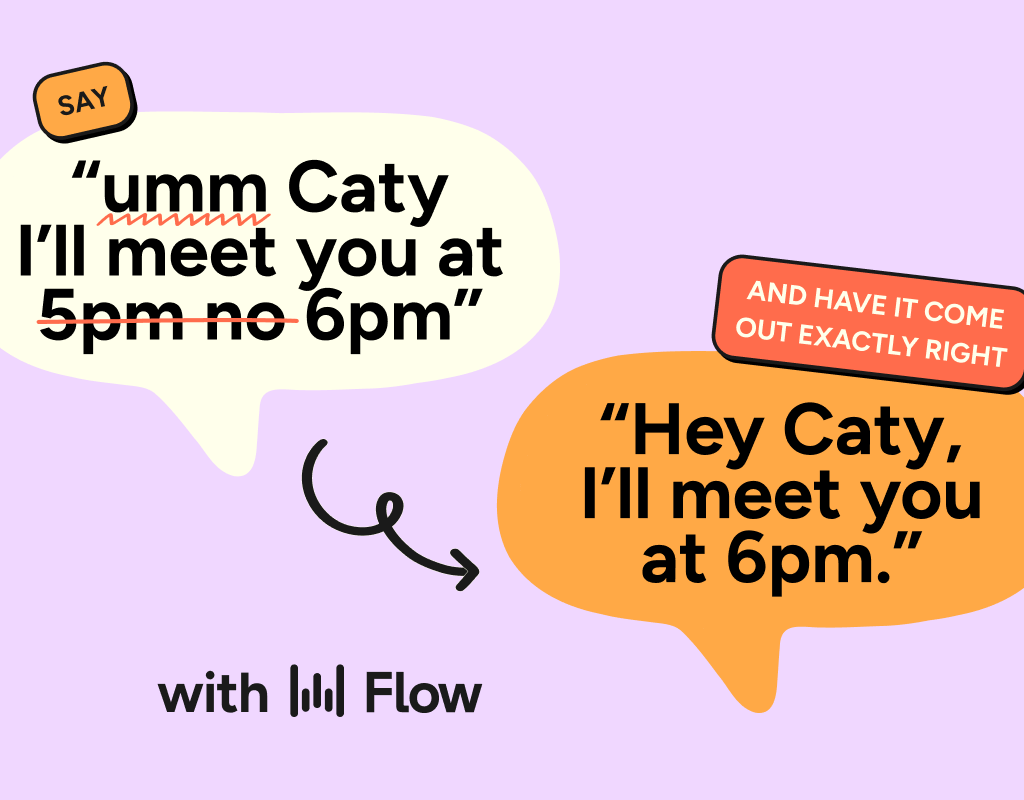
Wispr Flow turns your speech into clean, final-draft writing across email, Slack, and docs. It matches your tone, handles punctuation and lists, and adapts to how you work on Mac, Windows, and iPhone. Start for free today.

Sunday Special
Robot hands have come a long way in 16 years.

Back in 2009, the University of Tokyo's Ishikawa Komuro Lab stunned the robotics world with their fast hand, which could bounce a ping-pong ball faster than the eye could track. The three-fingered prototype took just one-tenth of a second to close, demonstrating what ultra-high-speed actuators could achieve.
By 2014, the University of Washington's Adroit hand ($300K custom build) took a different approach entirely; instead of pure speed, it prioritized machine learning and dexterity. The five-fingered hand could teach itself to spin a tube of coffee beans through trial and error, moving faster than human hands while learning from its own mistakes.
And last year, the Shenzhen-based Wuji Tech's hand represents yet another leap. With 20 active degrees of freedom and tiny motors embedded directly in each finger segment, it ditches the tendon-driven designs used by competitors like Tesla. As a result, robotics experts are calling it “remarkably robust” for its direct-drive system, which offers 20kg grip strength and dramatically reduces the simulation-to-reality gap that plagues other designs.
The progression tells a clear story: we've gone from raw speed to self-learning sophistication to production-ready reliability, each breakthrough building toward robots that can finally match human dexterity at scale.

A Cat’s Commentary


 | That’s all for now.
|
