

Welcome, humans.
So, someone gave several AI models real money to invest in the stock market. Four months in, Claude and Gemini are leading, all GPT models are underperforming the S&P, and Qwen dumped its entire $100K into a single stock and got wrecked. Classic Qwen move, honestly. You can watch the whole thing unfold live on Rallies AI Arena or copy Claude's portfolio on Autopilot.
Here’s what happened in AI today:
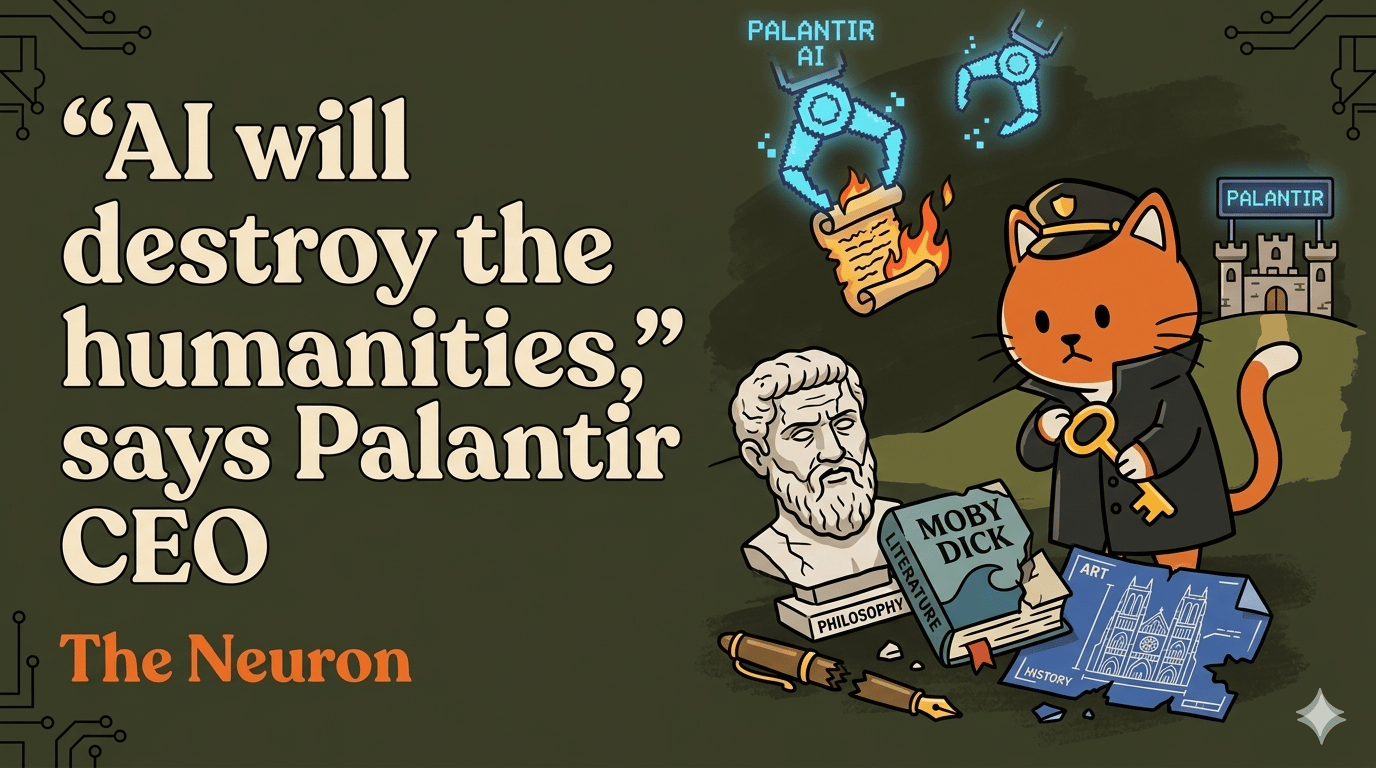
😺 Palantir's CEO says AI will destroy humanities jobs, but not all jobs.
📰 Microsoft declared a "Copilot Code Red" to catch up in the AI race.
📰 Cursor, Claude Code, and Codex quietly merged into one AI coding stack.
🍪 Gig workers reveal what it's really like to train AI for a Meta-backed company.
P.S: Want to reach 675,000 AI-hungry readers? Click here to advertise with us.

😺 The Palantir CEO Has a Blunt Message for Philosophy Majors: Good Luck.
Alex Karp has a philosophy PhD from a German university, a law degree from Stanford, and a very specific warning for anyone who followed a similar path.
"You went to an elite school and studied philosophy. I'll use myself as an example. Hopefully you have some other skill, because that one is going to be hard to market," Karp told BlackRock CEO Larry Fink at Davos earlier this year.
The Palantir CEO wasn't mincing words. AI, he said flatly that it will destroy humanities jobs. The people who'll be fine? The ones with specific, technical, vocational skills. Not generalized knowledge from an elite degree.
It's a provocative take, and not everyone agrees. McKinsey's global managing partner recently said the firm is actively recruiting more liberal arts majors for their creativity. BlackRock's own COO said they look for graduates who studied things with "nothing to do with finance or technology." But Karp isn't running a consulting firm. He's running a defense tech company, and he's betting on a different future.
His evidence isn't just theoretical. Palantir's own Maven system, an AI tool that processes drone imagery for the U.S. Army, is managed by a former police officer who attended a junior college. Karp's point: the old signals for aptitude (elite school, generalized degree) are becoming less reliable. What matters now is what you can actually do.
Karp also launched a Meritocracy Fellowship last year, offering high school students a paid internship with a shot at a full-time role, explicitly bypassing the university pipeline entirely.
Why This Matters: This isn't just one CEO being edgy at Davos. Youth unemployment for 16-24 year-olds hit 10.4% in December. A new Lumina-Gallup survey found 47% of college students have seriously considered switching majors over AI concerns, and 16% already did. The anxiety is real, and it's spreading faster than universities can respond.
Our Take: Karp is probably right that generalized knowledge alone won't cut it, but the framing of "humanities vs. vocational" is too clean. The more interesting question is whether universities can actually teach students to work alongside AI, rather than just warning them it's coming. Most can't yet, and that's the real problem. And personally, I think that as AI gets more integrated into our life, people will eventually crave for something made by humans. Right now, most are still amazed at what AI can do. But as soon as we get bored or accustomed to what AI can do, the humanities will re-emerge as people would go back to art, music, and literature made by humans.

FROM OUR PARTNERS
Work smarter with Slack — beyond just messaging
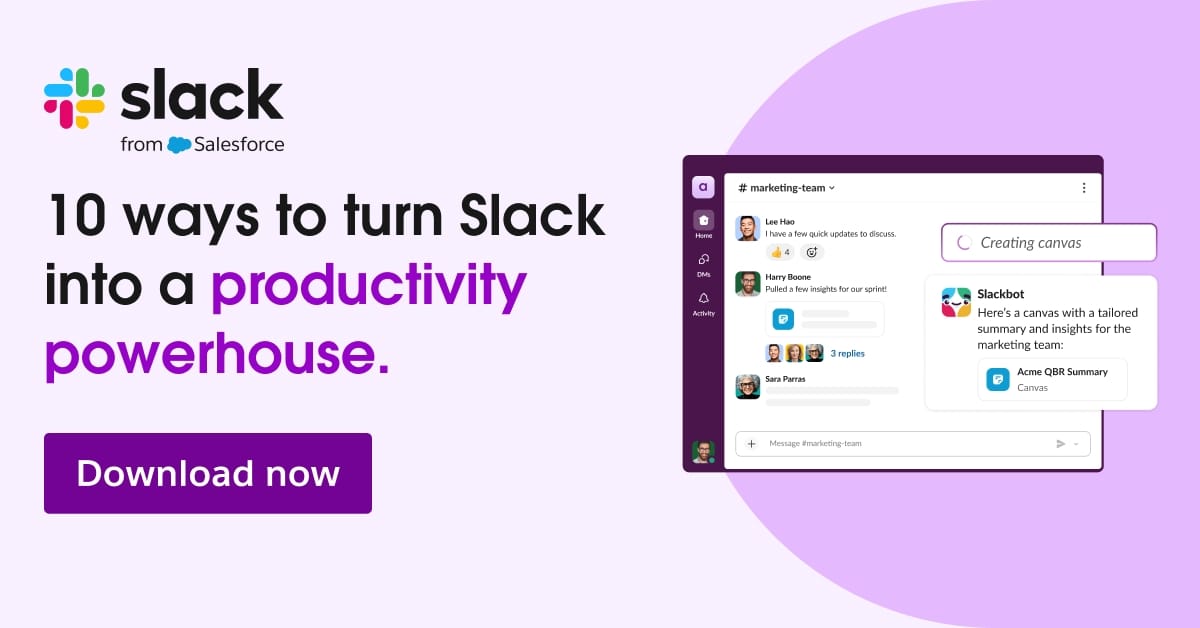
Learn 10 powerful ways to transform how your team works — from AI agents and Slackbot to automation, seamless collaboration, and connecting with customers in real time. No extra tools. No constant context-switching. Just one place where conversations, data, and workflows come together.

🎓 AI Skill of the Day: Use Notebooks in Gemini Like a Pro
Google just connected your NotebookLM notebooks in Gemini, and it solved a problem that Gemini users have been asking for years—folders.
But instead of giving us folders or projects similar to ChatGPT and Claude, Google made it even better by connecting NotebookLM. In this setup, think of a notebook as a dedicated workspace for a specific topic, project, or subject. You create one, give Gemini custom instructions, dump in your files and sources, and every chat you have inside that notebook stays organized there. No more losing conversations in a sea of random chats.
Our take: This feels like a hybrid between custom GPT, gem and project but smarter, because the notebook evolves as you add more context to it. A Gem has a fixed setup. A notebook grows with you. Plus, NotebookLM can create quizzes, videos, and podcasts within NotebookLM itself.
A few ways to use it right away:
Students: Create one notebook per subject, dump in your lecture notes and readings, and chat with that material all semester. Need a podcast episode or quiz on last week's lesson? Switch to NotebookLM and generate it from the same notebook.
Work: Set up a notebook per client or project with the relevant docs and custom instructions for tone. Here’s cool use case for people managers. Create a notebook per direct report if you're a manager. Drop in meeting notes and relevant docs via Google Drive, then ask Gemini what's been discussed over the past weeks before your next 1:1. No more scrambling through old notes.
Hobbies or side projects: Anything you keep coming back to deserves its own notebook so Gemini already knows the context. Writing the next Harry Potter, Lord of the Rings or Dune? Create a notebook for your characters, made-up language, spells, monsters, and lore. Gemini already knows your world every time you open it.
Have a specific skill you want to learn? Request it here.
Trending: Three popular Neuron podcast eps…
New episodes air every week on: Spotify | Apple Podcasts | YouTube
 |  |  |

🍪 Treats to Try
*Asterisk = from our partners (only the first one!). Advertise to 675K+ readers here!
The Gemini app now lets you turn any complex topic into an interactive simulation you can manipulate in real time, like adjusting gravity sliders to watch a moon orbit change instantly.
SkillForge watches you do a task once on your computer, then turns every click and keystroke into a reusable skill file your AI agent can replay automatically.
Edgee compresses your AI prompts before they hit any LLM provider, cutting token costs by up to 50% with no code changes required.
Osintir monitors the web 24/7 for deepfakes, identity theft, and unauthorized use of your content, alerting you the moment something is detected.
MiniMax builds multimodal AI models that handle text, audio, image, video, and music across one platform, serving 236M+ users in 200+ countries.
Spine Swarm lets you dispatch multiple AI agents to handle complex work simultaneously from one collaborative workspace.

📰 Around the Horn
Microsoft CEO Satya Nadella declared an internal "Copilot Code Red" to overhaul Copilot's performance and restore investor confidence amid growing competition from Anthropic.
Cursor, Claude Code, and OpenAI Codex stopped competing and started layering, forming an unplanned but composable AI coding stack with orchestration, execution, and review layers.
Gig workers for Scale AI, partly owned by Meta, revealed they were paid to tag children's faces, transcribe explicit audio, and label disturbing images to train AI systems.
Nearly half of college students have considered switching their major over AI job fears, per a new Lumina-Gallup survey, and 16% already did.
Anthropic launched a beta of Claude for Word, letting users ask questions about documents, edit text with tracked changes, and work through comment threads, targeting legal and finance professionals.

FROM OUR PARTNERS
Unblocked: Context to save you time and tokens.
Unblocked gives Cursor, Claude, and Codex the decisions, history, and conventions behind your code so they generate mergeable output the first time. It pulls context from across your engineering stack, resolves conflicts, and cuts the rework cycle by delivering only what agents need for the task at hand.

😹 Monday Meme

Hope she learned her lesson. Also, as my mom would say it when I burn food, “Just scrape the burned part. We don't waste food in this household. Never have, never will.”

A Cat’s Commentary
 | That’s all for now.
|
P.S: Before you go… have you subscribed to our YouTube Channel? If not, can you?

Click the image to subscribe!
