


Welcome, humans.
Energy is apparently the new currency. If you think your electricity bill is high these days, be glad you aren't Satya Nadella. The Microsoft CEO just said that “energy costs will decide which countries win the AI race.” How does he know? Because both his company and OpenAI just committed to “pay their own way” for any new datacenter energy costs. I guess now we know why Sam Altman is trying to raise another $50B before OpenAI goes public!
In all seriousness, we just dropped a massive deep dive on the real reasons your energy bills have been going up lately as we try to unpack the fight over America's power grid. Read the full explainer here.
Here’s what happened in AI today:
- Chinese tech giants (Alibaba, Tencent) are officially pivoting to agents.
- Apple is reportedly working on an AirTag-sized "AI Pin" to compete with OpenAI.
- OpenAI’s Jony Ive device is confirmed to be "on track" for a 2026 release.
- Logical Intelligence released "Kona," an energy-based model.
🔴 Going Live TODAY: Is your data science career cooked? We’re hanging out with Dennis Salguero (aka Data Science With Dennis) at 12pm PST / 3pm EST to talk all things AI and data science.
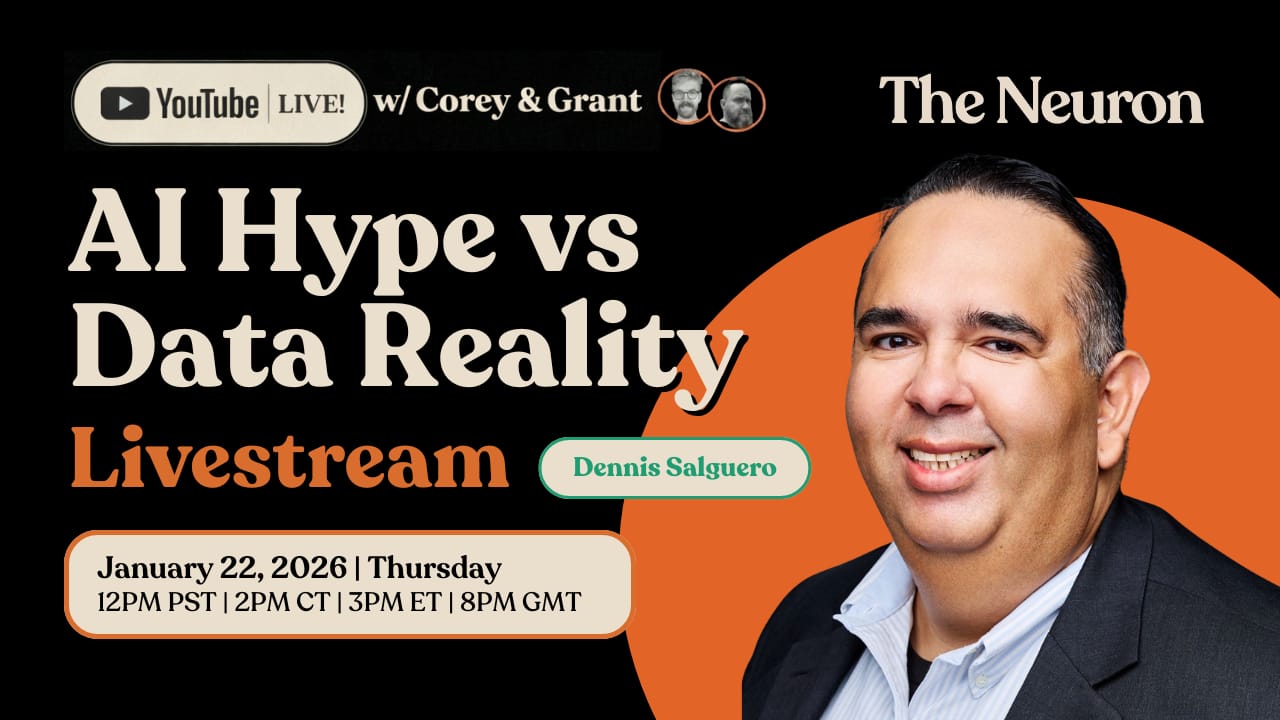
Click the image to join live, or if you’re early, click “Notify Me” when on the YouTube page to get notified when we start.
We’re also doing a LIVE showdown between Claude Code, Claude Cowork, and OpenAI’s Codex to see which one actually handles real data tasks. PLUS, we hear Dennis has the RECEIPTS on AI’s impact on data science jobs. Don’t miss out!

Apple’s AI Pin Leak & China’s Super App Moves Show The Era of the “App” Might Soon Be Over…
DEEP DiVE: The agentic era is upon us… and its not just impacting software.
Here’s a new way to think about what’s going on right now: For the last 15 years, we’ve lived in the “Read/Write” era (us humans tapping screens to get tech to work).
But 2026 marks the switch to the “Instruct/Verify” era: where you stop tapping, and start telling AI what you want, and then it does it.
This is happening in two shifts:
- The Interface: Cluttered icons are replaced by a single chat window (potentially on a generative infinite canvas).
- The Distribution: The “App Store” becomes an “Agent Library.” Apps aren't icons you download; they are skills you hire. Instead of opening Expedia, you’ll just tell Siri to "book a trip," and it delegates the task to the Expedia agent.
That’s kind of obvious now, right? But this shift goes beyond software, too. We are entering the "Pet Stage" of tech, where our tools become more like creatures we command than things we wield.
That change is now reshaping the type of devices that we’ll interact with:
- Software: Alibaba and Tencent are pivoting to "Agentic Commerce," where apps give way for agents who plan parties and handle payments automatically.
- Hardware: Apple is reportedly building an AirTag-sized "AI Pin," which will have multiple cameras and microphones, and OpenAI confirmed its own screen-free device is on track for late 2026.
- The Body: Eventually we’ll go from talking to devices to full on robots. The latest in this category is Rho, a new robot model from Microsoft that acts as a physical real-world agent. Uniquely, it can feel resistance, learning from human “course correction” instantly. Now imagine hundreds of these, in all sorts of shapes and sizes…
Why it matters: Between devices we talk to, and agents we call on demand, we are inreasingly going to need to get good at communicating what we need and managing these entities under our command.

FROM OUR PARTNERS
Your First 10 Hires Will Make or Break Your Startup - Lessons from Menlo Ventures, Rillet, and Clarify

Most first-time founders don’t know if they’re ready to hire, who the right person is, or how to close them. Without guidance, they burn months on bad fits or miss great candidates because they don’t yet know what “good” looks like.
Introducing a free, three-part course (next cohort: Feb 4) — led by repeat founders, operators, and investors from Menlo Ventures, Rillet, and Clarify.
What you’ll learn:
💡 Diagnose the right role (PM, ops, or generalist) at the right time
📝 Hire for aptitude with scorecards + AI-fluency frameworks
🤝 Close talent using negotiation tactics, comp benchmarks + offer templates
Includes: Templates, live Q&A + tactical frameworks — free.
🧢 First 25 live participants get a limited-edition First Principles hat.

Prompt Tip of the Day
Problem: Claude Code is amazing, but it burns through tokens (and your wallet) just trying to find the right files in your project. It’s like sending a librarian to find a book by reading every single cover in the library.
The Fix: A developer named Yoan Bernabeu built a tool called GrepAI. It replaces Claude’s brute-force searching with local semantic search (finding code by "meaning" rather than just keywords). The result? A massive 97% reduction in input tokens.
The "No-Install" Alternative: If you don't want to install a new CLI tool, users on Reddit found a clever manual workaround. Just ask Claude to build its own map:
The Prompt:
"Create a file called scriptReferences.md. List every script in this folder, its namespace, a 1-sentence description of what it does, and a direct file link. Whenever you need to find code, read this file first."
Our favorite insight: Whether you use the tool or the prompt, the strategy is the same: Don't let AI wander aimlessly. Give it a map (an index) so it can teleport straight to the destination.
Treats to Try
- Logical Intelligence's Kona 1.0 energy-based model enforces what's valid and safe in critical systems (like energy infrastructure or manufacturing) by learning from mistakes instead of guessing—try it here.
- Google’s Stitch turns prompts like "dark fitness app with neon accents" into working UI designs and HTML/CSS code you export to Figma or paste into your IDE, now with MCP server and Gemini CLI integrations for coding agents—free to try.
- Google Gemini now offers free full-length SAT practice tests (content from The Princeton Review) with instant feedback—take the test, see where you struggled, then ask Gemini to explain wrong answers and build a study plan—free.
- World API from World Labs generates persistent, explorable 3D worlds from text, images, or video that you can integrate into games, robotics simulations, or design tools.
- Runway’s Gen-4.5 Image-to-Video generates coherent longer stories with precise camera control and consistent characters, available for paid plans.
- Devin Review reorganizes your GitHub pull requests by grouping related changes together (not alphabetically), flags bugs by severity, and lets you chat about the code—free to try.
- Acrobat Studio turns your documents into presentations or podcasts you can listen to on your commute, and lets you edit PDFs by typing "remove page 3" instead of hunting through menus.
Around the Horn
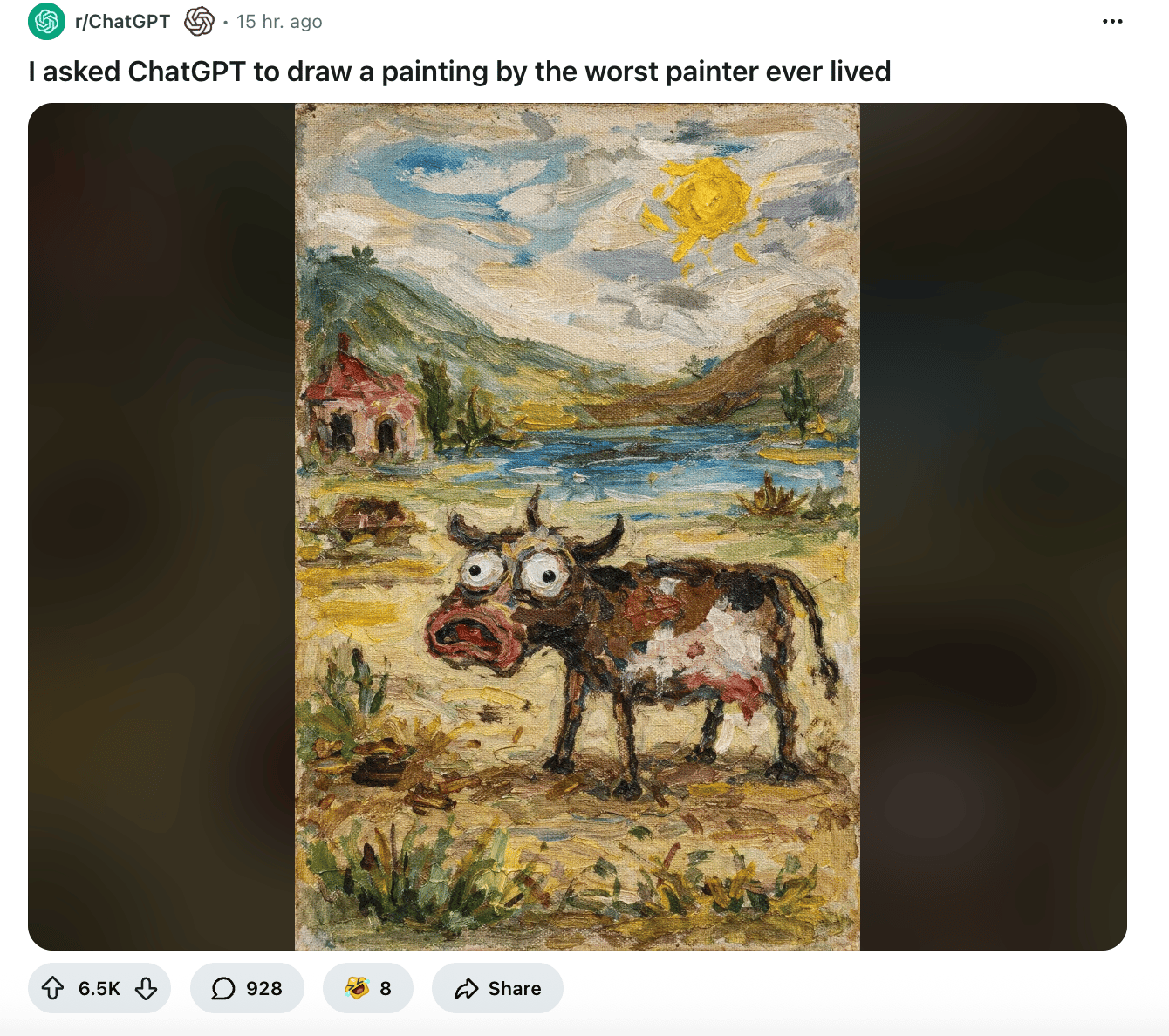
Here’s a fun viral prompt for ya!
- Meta has began to internally deploy its new reasoning models, codenamed “Avocado” (for code/logic) and “Mango” (for images).
- Anthropic’s margins are down from 50% to 40% due to the cost of running inference on Google and Amazon’s servers being 23% higher (according to The Information).
- OpenAI is apparently working on a new tool code-named “Salute” that can accept file uploads and track its progress towards completion (sorry, not sure how this is different than “Agent” mode, minus file uploads?)
- Anthropic released Claude’s “Constitution”, detailing how the model is meant to handle the delicate ambiguity between helping users and keeping the rest of us safe (p.s: it can be used by anyone for any purpose via this deed).

FROM OUR PARTNERS
Dictate the messy version. Wispr Flow outputs the clean version. It removes filler, fixes punctuation, and formats lists so your text is ready to paste into email, Slack, docs, or prompts. Start for free today.
Thursday Trivia
One is AI and one is real. Which is which? Vote below!
A.

B.

Which is AI, and which is real?
Which is AI, and which is real? The answer is below, but place your vote to see how your guess everyone else (no cheating now!)
P.S: We heard from some folks that you miss being able to see everyone’s answers to these trivia questions. We’ll get back to showing these next week, but we have to come up with a creative solution for it that doesn’t break Gmail. Stay tuned!
A Cat’s Commentary

Trivia answer: A is AI, and B is real (well, we’re 85% sure it is anyway!)
