




Welcome, humans.
Did anyone see the new Frankenstein remake from Guillermo Del Toro on Netflix? It was a very beautiful, haunting film.
In a way, Frankenstein is the most perfect metaphor for AI. We’re creating a monster (no judgement; Franken-Elordi was lovely) assembled from not just a few humans put together, like in the movie, but the collective learnings of all humans and trying to create new life with a lil’ electricity and hutzpah. Some hubris we have, huh?
Anyway, worth noting how that ended up for dear old Dr. Frankenstein: after mistreating his creation and assuming it was incapable of true learning, he abandoned it to the wild, where it learned all sorts of things; including that his creator is kinda a jerk.
In the end, they both resolved that the only fair conclusion was for the monster to kill Doctor Frankenstein (not directly, but his relentless revenge causes the doc to die of exhaustion, cold, and despair), leaving the monster to wander the Earth alone.
Let’s, y’know, NOT repeat that pattern with AI, yeah?
What’s the inspiration for this rant? The no good, very bad vibes out there worried about AI right now. Case in point:

This was the top upvoted comment ON THE CHATGPT REDDIT yesterday. Makes ya wonder how the non-AI community feels.
Here’s what happened in AI today:
Anthropic just closed a historic $30B funding round.
Google released Gemini 3 Deep Think.
OpenAI dropped GPT-5.3-Codex-Spark.
China's new open-weight MiniMax M2.5 model.
Shameless plug! Do you love Corey and Grant for our charming and winning personality? (Aww, thanks, all five of you!) Well, we went on the Channel Insider podcast to talk about the origins of the podcast, how to think about AI progress for normal people, and how normal people are using AI in their actual lives.
Check it out, and support Katie Bavoso and Victoria Durgin with their awesome show!

A round up of yesterday’s big new pieces…
So, Anthropic just closed a $30B round at a $380B valuation. That's the second-largest private tech raise ever, behind OpenAI's $40B+ round last year. These two companies are also now in a literal political arms race—Anthropic dropped $20M into a Super PAC pushing for AI regulation, while OpenAI's co-founder Greg Brockman put $25M into a PAC that wants the government to keep its hands off.
In total, AI companies have now committed over $200M to the 2026 midterms. Hmmm…
Moving on, this week also saw a flood of new model releases, all of which have potential to make a huge difference depending on if you need amazing reasons (Deep Think) or affordable coding (the rest).
That said, they are:
Gemini 3 Deep Think, the first model to simultaneously top math, science, and coding benchmarks — hitting #8 worldwide on Codeforces and gold medals at two Olympiads.
MiniMax M2.5 matches Claude Opus on coding benchmarks at 10–20x lower cost — open-weight, agent-native, and $1/hour to run continuously.
GPT-5.3-Codex-Spark hits 1,000+ tokens/sec on code edits — fast enough that iteration feels instant rather than like waiting (like Gemini Flash, but GPT).
GLM-5 is open-weight, MIT-licensed, and 5–8x cheaper than Opus — currently the top-ranked open-source model on agent and coding benchmarks.
Why this matters: What’s notable about this line-up is you’ve got two open Chinese models (open meaning anyone can take the “weights” that determines how a model runs and run it themselves going head to head against two of the top closed American lab models in a single week. Lots of ink has been spilled on this, but you could technically swap these out in any workflow, using Openrouter or even Openclaw.
Also: Someone used Gemini 3 Deep Think in a single shot to build a real-time 3D WiFi radar that visualizes every nearby network as glowing Matrix-style nodes. Just wild.
Lastly: To put all this together, se wrote a longer thing than could fit in this email on the website about how you can use Copilot Studio and other one-off agents to “agentify” your workflow in a few practical ways. Y’know, so you can actually keep up at work.
This was inspired by our livestream, which has a lot more details in it, but is also two hours. We’re waiting for the transcript to load on YouTube so we can break this sucker down for ya more in depth; for now, read this.

FROM OUR PARTNERS
Deep analysis for deep questions

Stop talking to walls of predictive text and start doing real research with Superagent. Give it a question, and it gets to work: Subagents deeply interrogate your topic — scouring a wide range of credible sources and using those findings to inform additional research directions — and finally package it all up into boardroom-ready reports, slides, docs, or websites.

Prompt Tip of the Day
God of Prompt revealed 10 advanced prompting techniques used by researchers for structured, verified, and expert-level outputs.

He shared it in the thread, but if you don’t want to go to X, you can probably copy this image, paste it into your AI, and ask it to “transcribe this image exactly as it appears”, then save the output.

FROM OUR PARTNERS
Editor’s Pick: The all-new Slackbot

Why We Love It: It's like having your smartest teammate on speed dial
Slackbot is your personal AI agent built in Slack. It understands your context, finds what you need, and takes action instantly.

Treats to Try
Cloudflare now lets agents get real-time Markdown conversion of any website by sending a single
Accept: text/markdownheader, reducing tokens with no custom handling requiredHibiki-Zero is an open-source model that translates French, Spanish, Portuguese, or German speech to English in real-time, preserving voice characteristics at low latency using RL-based training.
Claude Code rolled out multi-repo sessions, better git visualization, and slash commands for more powerful daily coding workflows
HeyGen lets you dub any video — like an ad, or Bad Bunny’s Super Bowl halftime show — into a new language while preserving the original voice and lip sync (post) — no pricing details.
TinyFish automates web tasks like booking flights and scraping data with 90% accuracy on the Mind2Web benchmark, running 300 tasks in parallel for production-scale efficiency.

Around the Horn

These videos are so good; here’s another one.
Simile launched with $100M to simulate human societies using AI agents modeled on real human behavior; Andrej Karpathy angel-invested, calling it a new paradigm for LLMs as population simulators.
OpenRouter hit 12 trillion weekly tokens — a 12.7x increase — matching the inference scale Azure was running six months ago.
François Chollet predicted “AGI”, or artificial general intelligence (where an Ai can generalize across domains and do anything a human can) will arrive around 2030, when no test can show a meaningful human-AI gap.
NEW: Want more? Check out our new Around the Horn Digest for February here.

FROM OUR PARTNERS
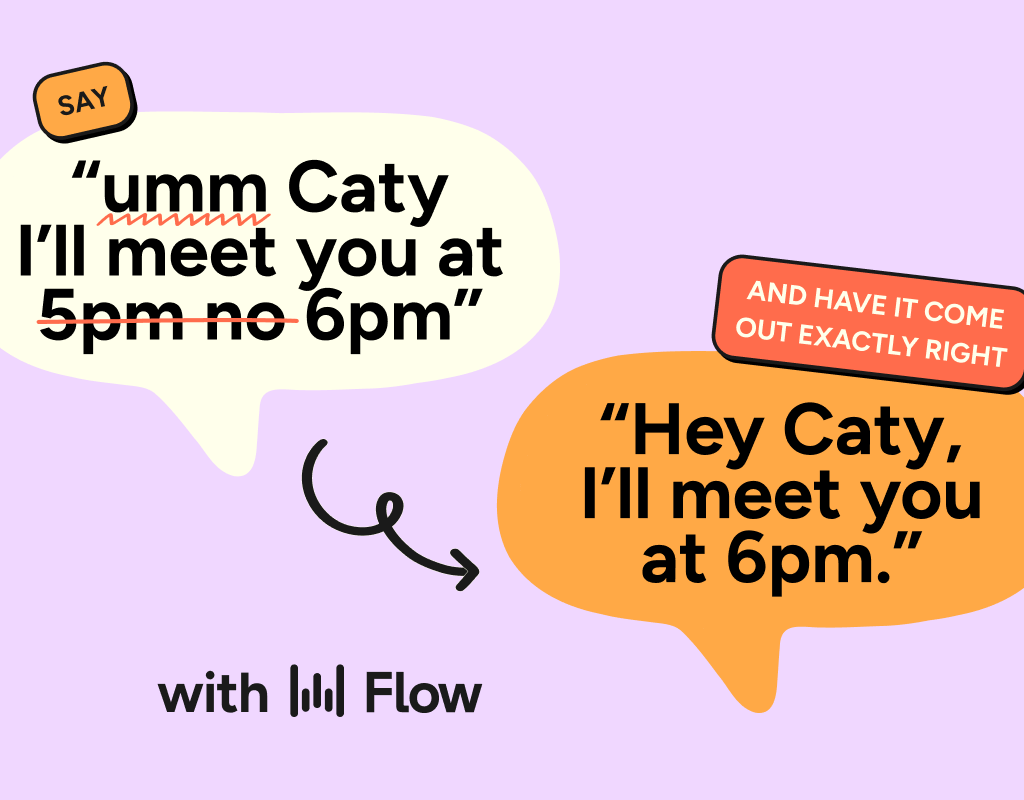
Wispr Flow turns your speech into clean, final-draft writing across email, Slack, and docs. It matches your tone, handles punctuation and lists, and adapts to how you work on Mac, Windows, and iPhone. Start for free today.

Intelligent Insights

Really puts this al in perspective
To Think or Not To Think throwing more “thinking time” at a model doesn’t consistently make it better at understanding what a person believes or intends, and sometimes it actually makes performance worse.
Why it matters: We can’t assume “more reasoning” automatically fixes social intelligence; it can introduce new failure modes.
Stanford HAI argues that as countries worry about control over AI and digital infrastructure, we may see new alliances among mid-sized nations built around shared compute, data, and deployment infrastructure.
Why it matters: The AI race isn’t just who controls the models, but who controls the rails (infrastructure + access).
Will Manidis published "Tool Shaped Objects," arguing the current AI boom is "FarmVille at institutional scale" — companies spending billions on workflows that mimic productivity without producing real economic value.
Nick Bostrom released a paper arguing that superintelligence's benefits — curing diseases, extending life — outweigh the risks, comparing delay to choosing inevitable death over risky surgery.
Read more Intelligent Insights in today’s Around the Horn Digest!

 | That’s all for now.
|
