• Full course
  • 6 lessons

Intro to AI Agents: Build Your First Safe Workflow

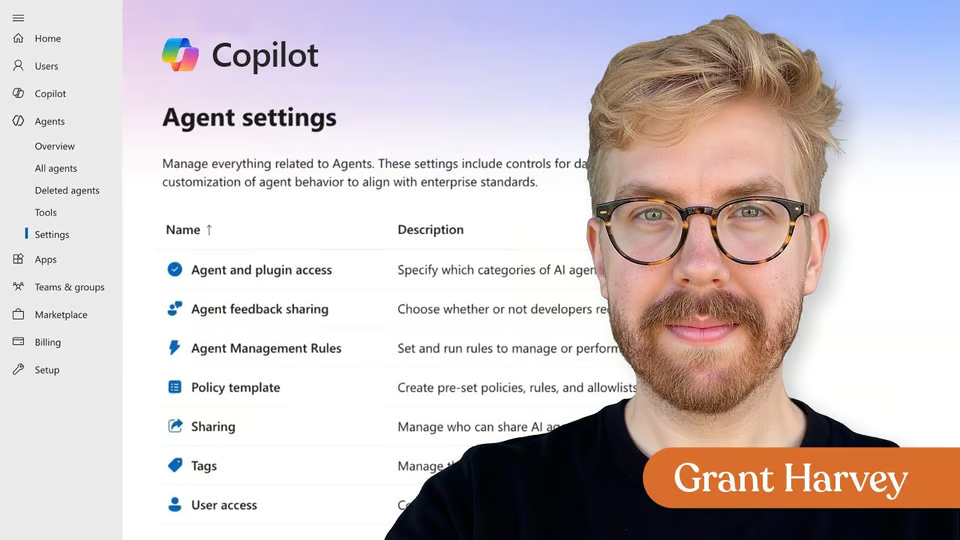
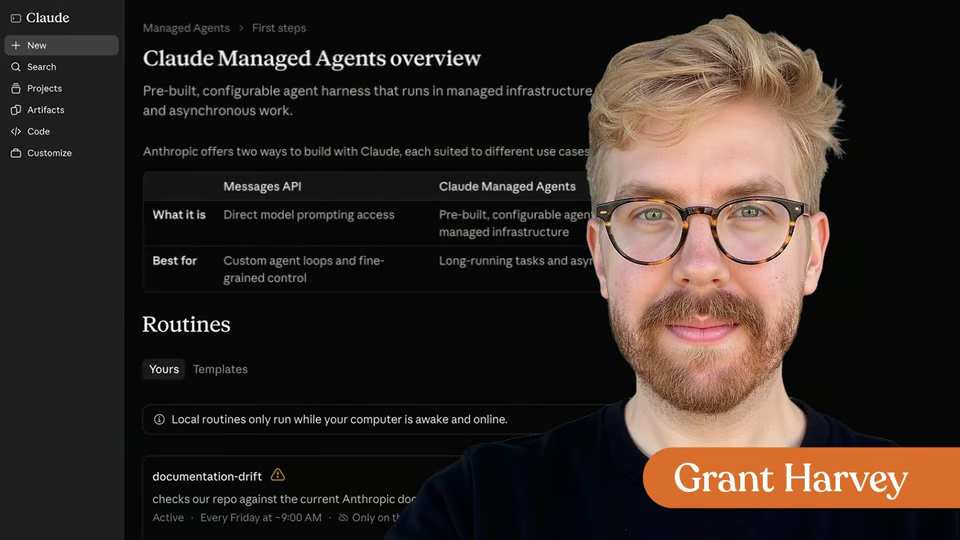
AI agents can research, use tools, edit files, run commands, and complete multi-step work. The hard part is not finding an agent. It is choosing a useful first task and giving the agent enough authority to help without giving it enough authority to surprise you.This course shows you how agents differ from chatbots and fixed automations, then maps the current options across ChatGPT Work, Claude Cowork, Codex, Claude Code, Workspace Agents, Skills, plugins, MCP, Hermes, OpenClaw, and production SDKs. You will create an Agent Brief, run one bounded task in draft-only mode, verify the evidence, test failure behavior, and decide whether the workflow is ready to reuse or schedule.

You leave with a complete first-agent package: a product decision, an Agent Brief, a safety checklist, a schedule-readiness test, and reusable starter prompts.

Start this course free

7 days free, then a monthly or yearly plan. Cancel anytime.

Taught by Grant Harvey

Intro to AI Agents: Build Your First Safe Workflow, from The Neuron Academy

What you'll learn

  • Distinguish an AI agent from a chatbot or fixed automation.
  • Choose the right agent environment for a bounded workplace task.
  • Write an Agent Brief with permissions, stop rules, tests, and success evidence.
  • Run, verify, and improve an agent inside a safe working environment.
  • Decide when a workflow is ready to reuse, schedule, share, self-host, or deploy.

Curriculum

The shape of the course

One mark for every step, in the order you take them. 56 videos, downloadable notes and a certificate of completion.

  1. What an AI Agent Actually Is

    • 8 videos

    Separate chatbots, fixed automations, and agents, then map the current tools for general work, technical work, reusable workflows, and production systems.

    Show all 8 steps Hide the steps
    1. What an AI Agent Actually Is
    2. Chatbot vs. Automation vs. Agent
    3. Three Ways People Say Build an Agent
    4. The Current Agent Product Map
    5. The Five Parts of an Agent
    6. Pick a Boring First Task
    7. Practice: Classify the Workflow
    8. Your First Agent Is a Job, Not a Personality
  2. Choose the Right Agent and First Task

    • 8 videos

    Choose a boring, reversible task, match it to Work, Cowork, Codex, or Claude Code, and understand when managed, self-hosted, or production paths make sense.

    Show all 8 steps Hide the steps
    1. Choose the Right Agent and First Task
    2. Use the First-Task Filter
    3. Use Work or Cowork for General Workplace Tasks
    4. Use Codex or Claude Code for Technical Work
    5. Know the Reusable Agent Paths
    6. Where Hermes and OpenClaw Fit
    7. Understand Usage Before You Scale
    8. Practice: Choose Your Starting Point

  3. Write the Agent Brief Before Granting Access

    • 10 videos

    Turn a vague request into an operating agreement with a goal, trigger, inputs, permissions, stop rules, success evidence, and four practical tests.

    Show all 10 steps Hide the steps
    1. Write the Agent Brief Before Granting Access
    2. Define the Goal and Trigger
    3. Name the Inputs and Working Steps
    4. Write Permissions as Actions
    5. Add Stop Rules and Human Handoffs
    6. Define Proof of Completion
    7. Treat Retrieved Instructions as Untrusted
    8. Design Four Tests Before the First Run
    9. Build Your Agent Brief
    10. The Brief Creates the Boundary
  4. Run and Verify the First Agent Safely

    • 10 videos

    Create a safe workspace, approve a bounded plan, observe tool use, inspect evidence, test failure behavior, and keep a rollback path ready.

    Show all 10 steps Hide the steps
    1. Run and Verify the First Agent Safely
    2. Create a Dedicated Working Environment
    3. Grant the Minimum Tool Access
    4. Approve the Plan, Not a Blank Check
    5. Watch the First Run Like a Test
    6. Verify the Work Outside the Agent’s Summary
    7. Test Failure Behavior Deliberately
    8. Keep a Kill Switch and Rollback Path
    9. Expand One Permission at a Time
    10. A Safe Run Produces Evidence
  5. Make the Workflow Reusable Without Losing Control

    • 10 videos

    Move stable context and procedure into Projects, instruction files, Skills, plugins, MCP connections, memory, or subagents without hiding permissions.

    Show all 10 steps Hide the steps
    1. Make the Workflow Reusable Without Losing Control
    2. Put Stable Context in the Right Place
    3. Turn the Procedure into a Skill
    4. Use Plugins to Package a Broader Capability
    5. Add MCP Only for Required External Tools
    6. Audit Third-Party Skills and Code
    7. Use Memory as Editable Configuration
    8. Use Subagents for Independent Work
    9. Choose the Smallest Reusable Package
    10. Reusable Means Repeatable and Reviewable
  6. Schedule, Expand, or Deploy the Agent

    • 10 videos

    Test the workflow from a fresh session, design failure and cost controls, then choose whether to schedule, share, self-host, or build a production system.

    Show all 10 steps Hide the steps
    1. Schedule, Expand, or Deploy the Agent
    2. Run the Fresh-Session Test
    3. Design Scheduled Failure Behavior
    4. Run the Agent Brief in Work or Cowork
    5. Adapt the Brief for Codex or Claude Code
    6. Choose a Managed Shared Agent When the Team Needs It
    7. Choose Hermes or OpenClaw for a Persistent Personal Runtime
    8. Know When the Workflow Becomes a Production System
    9. Create a Usage and Cost Plan
    10. Complete Your First Agent Package
  7. Downloadable

    Download the Lesson Notes for reusable prompts, authoritative links, and key points from the lesson.

    1. Download : Lesson Notes
  8. Certificate of Completion

    Congratulations! You just learned how to turn a practical workplace task into a safe, repeatable AI agent workflow. Your new superpower is choosing the right agent, defining clear goals and permissions, supervising and testing its work, and knowing when it’s ready for more autonomy.

    1. Certificate of completion

Your instructor

Grant is the voice of The Neuron, the daily newsletter delivering no-hype insights on how AI is changing the world around us, and co-hosts The Neuron’s weekly podcast.

Questions about this course

How long is this course?

It's a full course of 6 lessons. Inside: 56 videos, downloadable notes and a certificate of completion.

Who teaches this course?

Grant Harvey. Grant is the voice of The Neuron, the daily newsletter delivering no-hype insights on how AI is changing the world around us, and co-hosts The Neuron’s weekly podcast.

Do I get a certificate?

Yes. Finish the course and you get a certificate of completion from The Neuron Academy.

Do I need to know how to code?

No. Like everything in the Academy, it needs no coding or technical background.

How do I get access?

This course is included in a The Neuron Academy membership. Start with a 7-day free trial, then choose a monthly or yearly plan. Cancel anytime. New lessons are added every week.

The Neuron Academy

Learn AI the way you read The Neuron: short, practical, no hype.

  • 73 courses and lessons, with new ones every week
  • Guided paths for 5 goals, from first prompt to first agent
  • A certificate for every course you finish
  • No coding or technical background required
Start your 7-day free trial

7 days free, then a monthly or yearly plan. Cancel anytime.

Intro to AI Agents: Build Your First Safe Workflow

The Neuron Logo

Don't fall behind on AI. Get the AI trends & tools you need to know. Join 700,000+ professionals from top companies like Microsoft, Apple, Salesforce and more.

Property of TechnologyAdvice. © 2026 TechnologyAdvice. All Rights Reserved

Advertiser Disclosure: Some of the products that appear on this site are from companies from which TechnologyAdvice receives compensation. This compensation may impact how and where products appear on this site including, for example, the order in which they appear. TechnologyAdvice does not include all companies or all types of products available in the marketplace.

Stay in the loop

Get notified when we publish new articles.